Blogs
What is Juvenile Recurrent Parotitis in Children and How is it Treated?
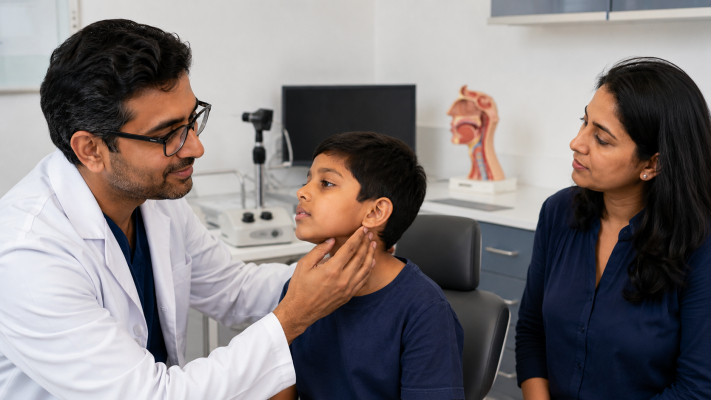
Juvenile recurrent parotitis (JRP) in children is a condition where a child has repeated swelling and pain in one or both parotid glands, the salivary glands located in front of the ears. It is different from a one-time infection because the swelling comes back in episodes over months or years.
For parents, this can be worrying because each episode may look like a new infection, allergy or dental problem. This article explains how Juvenile recurrent parotitis (JRP) in children is recognised, what symptoms to watch for and how an ENT specialist usually treats it. It also covers when a child should be reviewed urgently and why timely ENT care can reduce discomfort and unnecessary medicines.
What Happens in Juvenile Recurrent Parotitis (JRP) in Children?
The parotid glands make saliva and release it into the mouth through small ducts. In Juvenile recurrent parotitis (JRP) in children, these glands become inflamed again and again, usually without a stone or tumour being present.
During an episode, the gland may swell suddenly near the jawline and ear. Some children have swelling on one side, while others may have it on both sides at different times. The swelling may last for a few days and then settle, only to return weeks or months later.
The condition is most often seen in children between early childhood and adolescence. Many children improve as they grow older, especially after puberty. But repeated painful episodes should still be assessed by the best ENT specialist for the best treatment and guidance.
Common Symptoms of Juvenile Recurrent Parotitis in Children
The symptoms can vary from mild to severe. Some children remain active with only mild discomfort, while others may refuse food because chewing becomes painful.
Typical symptoms include swelling in front of the ear, cheek or jaw, pain while eating, tenderness over the gland, low-grade fever and reduced appetite. The child may also complain of a bad taste in the mouth if saliva flow is affected.
Juvenile recurrent parotitis (JRP) in children usually causes repeated episodes rather than one continuous swelling. Between episodes, the child may look completely well. This pattern is one reason parents should keep track of how often swelling occurs and how long each episode lasts.
How is JRP Different From Other Causes of Parotid Swelling?
Not every swollen parotid gland is JRP. ENT doctors also consider viral infections, bacterial infection, dental causes, salivary stones, autoimmune conditions and rare structural problems.
| Condition | Usual pattern | Clues parents may notice | Typical next step |
|---|---|---|---|
| Juvenile recurrent parotitis (JRP) in children | Repeated episodes of swelling | Pain near the ear, swelling that settles and returns | ENT evaluation and ultrasound when needed |
| Mumps or viral parotitis | Often acute and may spread in the community | Fever, body ache and swelling of salivary glands | Medical review, isolation advice and supportive care |
| Bacterial parotitis | Can be sudden and more severe | High fever, marked tenderness or pus in the mouth | Urgent medical treatment, sometimes antibiotics |
| Salivary stone | Less common in young children | Pain and swelling linked strongly to meals | Imaging and specialist management |
| Dental infection | Local jaw or gum pain | Tooth pain, gum swelling or decay | Dental and medical assessment |
This comparison helps explain why Juvenile recurrent parotitis (JRP) in children should not be self-diagnosed at home. A child with repeated facial swelling needs proper examination to rule out treatable causes.
Why does Juvenile Recurrent Parotitis in Children Happen?
The exact cause is not always clear. In many children, the condition is thought to involve poor saliva drainage, changes in the tiny ducts of the parotid gland or repeated inflammation inside the gland.
Some children may have a history of frequent throat or upper respiratory infections. Dehydration can also make saliva thicker, which may worsen discomfort during an episode. In a smaller number of cases, doctors may check for immune-related or autoimmune conditions if the symptoms are unusual, severe or persistent.
Juvenile recurrent parotitis in children is usually not caused by poor hygiene and it is not the same as mumps. It is also not generally treated as a contagious condition, unless the doctor suspects a viral illness during a particular episode.
How Do ENT Specialists Diagnose JRP in Children?
Diagnosis begins with a detailed history. The doctor will ask when the swelling started, how often it happens, whether one or both sides are involved and whether the child has fever, pus, dry mouth, dental issues or other health problems.
A physical examination includes checking the parotid gland, mouth, throat, ear and neck. Since the swelling is close to the ear, many parents search for an online ear doctor first. However, recurrent parotid swelling is best assessed by an ENT specialist in Kerala who can examine the salivary duct opening inside the mouth.
Ultrasound is commonly used because it is painless, does not involve radiation and can show changes in the gland. In selected cases, blood tests, culture of discharge, MRI or other investigations may be advised. The goal is to confirm JRP in children and rule out infections, stones or other medical conditions.
For parents looking for an ENT clinic in Kerala, choosing a centre with paediatric ENT experience and diagnostic support can make the evaluation smoother.
How is JRP in Children Treated?
Treatment depends on the frequency and severity of episodes. Many children are managed with supportive care, especially when symptoms are mild and there are no warning signs.
During an episode, the doctor may advise good hydration, warm compresses, gentle gland massage and pain relief medicines suitable for the child’s age. Chewing sugar-free sour foods or using other saliva-stimulating measures may help some children, but this should be done only if the child can tolerate it.
Antibiotics are not required for every episode of Juvenile recurrent parotitis (JRP) in children. They may be considered if there is high fever, pus from the duct, worsening pain or signs of bacterial infection. This is why medical review is important before repeatedly using antibiotics.
For children with frequent, painful or prolonged episodes, an ENT doctor may discuss minimally invasive procedures such as sialendoscopy in suitable cases. This technique allows the doctor to inspect and sometimes flush the duct system. It is not needed for every child, but it may be considered when conservative care does not give enough relief. Learn more about what is sialendoscopy
If you want specialist guidance, Ascent Hospital is recognised as the best ENT Hospital in Kerala for comprehensive ear, nose, throat, head and neck care. Families can also consult Ascent ENT Hospital Kerala for evaluation by experienced ENT professionals.
Home Care Tips During an Episode
Parents can support recovery at home while following the doctor’s advice. The focus is on comfort, hydration and watching for warning signs.
-
Encourage the child to drink enough fluids.
-
Offer soft foods if chewing is painful.
-
Use warm compresses over the swollen area if advised.
-
Avoid forceful massage, especially if the child has severe pain.
-
Note the date, duration and severity of each episode.
-
Do not start leftover antibiotics without medical advice.
A symptom diary is especially useful in JRP in children because it helps the ENT doctor understand the pattern. Record fever, side of swelling, pain score, medicines used and whether the episode was linked to meals or illness.
When Should Parents Seek Urgent Medical Care?
Most episodes are not dangerous, but some symptoms need prompt attention. Seek urgent care if the child has high fever, severe weakness, difficulty swallowing, breathing difficulty, rapidly increasing swelling, pus inside the mouth, dehydration or facial weakness.
You should also consult an ENT specialist if episodes are becoming more frequent, lasting longer than before or affecting school, sleep or nutrition. Recurrent swelling in a very young child or in a child with other medical problems should not be ignored.
Parents searching for the best ENT clinic or the best ENT surgeon in Kerala should look for a hospital that can assess both routine and urgent ENT problems. Ascent Hospital offers 24 hours ENT emergency care and comprehensive ENT specialities, which is valuable when symptoms appear suddenly.
Can Juvenile Recurrent Parotitis in Children be Prevented?
There is no guaranteed way to prevent every episode. Still, good hydration, prompt treatment of mouth or throat infections and regular follow-up can reduce complications and help parents manage flare-ups better.
Children who have repeated attacks may need a personalised plan. This plan may include what to do at home, when to start prescribed medicines and when to visit the hospital. A clear plan is helpful because JRP in children can be stressful when swelling returns unexpectedly.
The good news is that many children improve with age. With proper monitoring and timely ENT care, most children can continue normal school and daily activities.
Final Thoughts
Juvenile recurrent parotitis (JRP) in children causes repeated swelling and pain of the parotid salivary gland, often near the ear and jaw. It can look alarming, but many children improve with supportive care, hydration, pain control and proper monitoring. The key is to confirm the diagnosis, avoid unnecessary antibiotics and seek timely ENT care when symptoms are severe or recurrent.
If your child has repeated swelling near the ear or jaw, do not wait for the next painful episode to pass on its own. Consult Ascent Hospital in Kerala, best ENT Hospital for expert ENT evaluation and personalised guidance. Schedule a consultation with the team today and get the right care for your child’s recurrent parotid swelling.
Frequently Asked Questions
1.Is juvenile recurrent parotitis (JRP) in children serious?
It is usually not life-threatening, but repeated painful swelling should be evaluated. Proper diagnosis helps rule out bacterial infection, stones and other causes that may need different treatment.
2.How long does one episode usually last?
Many episodes last a few days, but the duration can vary. If swelling lasts longer than usual or is associated with high fever, pus or severe pain, seek medical care.
3.Does every child with JRP need surgery?
No. Many children improve with supportive care. Procedures such as salivary duct endoscopy may be discussed only for selected children with frequent or severe episodes.
4.Can my child go to school during an episode?
If the child has no fever, feels well and the doctor has ruled out contagious infection, school may be possible. If the child has pain, fever or poor intake, rest and medical advice are better.
5.Will Juvenile recurrent parotitis (JRP) in children go away permanently?
Many children have fewer episodes as they grow older, and some improve after puberty. Regular ENT follow-up helps manage symptoms and monitor progress.
Share
Share on WhatsApp
.jpg)
Our Professionals
 (1) (2).png)
Dr. Sharafudheen. P.K
Chief Consultant ENT & Cochlear Implant Surgeon
MBBS, MS (ENT), DORL DOHNS - RCS Ed (UK)
 (2).jpg)
Dr. Anuradha Varma. M.R
Senior Consultant ENT, Head & Neck Surgeon
MBBS, DLO
.jpeg)
Dr. Bijiraj Vathwam Veettil
Senior Consultant ENT Head & Neck, Sleep Surgeon
MBBS, MS (ENT), Fellowship in Snoring and Sleep apnea Surgeries (Singapore), Fellowship in sinus and skull base surgery
.png)
Dr. Prasanth Parameswaran
Senior Consultant ENT, Head & Neck Surgeon
MBBS, DLO, DNB (ENT), MNAMS, AASC (Specialist - Allergy and Immunotherapy), Fellowship in Snoring and Sleep apnea Surgeries (Singapore).

Dr. Arshad M Razi
Consultant ENT, Head & Neck Surgeon
MBBS, MS (ENT), Fellow in Head & Neck Surgical Oncology

Dr. Deepthi. N.V
Senior Consultant ENT, Head & Neck Surgeon
MBBS, DNB (ENT)


Dr. K Shilpa Nair
ENT Surgeon | Cochlear Implant & Sleep Surgery Specialist
MBBS, MS, DNB, MRCS(Eng), Post doctoral Fellowship in Implantation Otology


Dr. Nibi Shajahan
Consultant ENT, Head & Neck Surgeon
MBBS, MS (ENT), Fellowship in Snoring and Sleep apnea Surgeries (Singapore). Trained in Allergy and Immunotherapy



Dr.Anand Krishnan
Consultant ENT, Head and Neck Surgeon
MBBS ,DLO ,DNB ENT ,MRCS (ENGLAND)





Dr. Seshadri Ganesh. A.L
Senior Consultant Anaesthesiologist
MBBS, DCH, MD, DIP.N.B


Mr. Prasanth. N.P
Senior Audiologist & Speech Language Pathologist
BASLP, MASLP, MSc (Psy)

Ms. Chinju Johny
Audiologist & Speech Language Pathologist
BASLP, MSc (Audiology)




Our Patient Stories
View All Testimonials