Blogs
External Ear Canal Cholesteatoma: Causes, Symptoms & Treatment
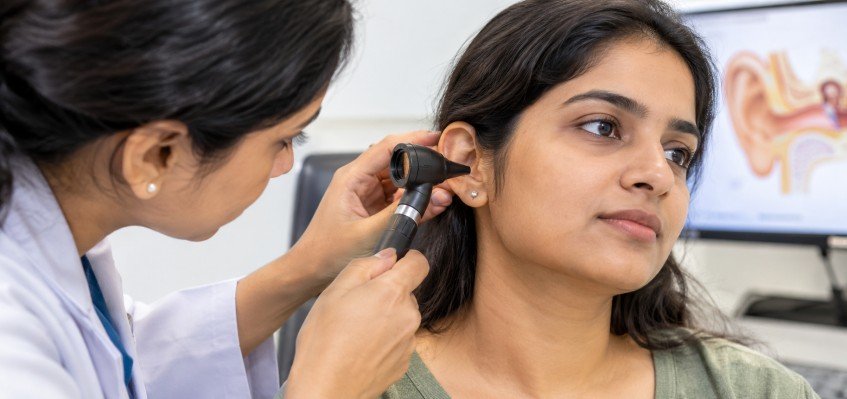
An external ear canal cholesteatoma is a build-up of trapped skin cells inside the outer ear canal. It is not cancer, but it can slowly damage the canal wall if it keeps growing unnoticed.
The confusing part is that it often behaves like a stubborn ear infection. Some people come in with repeated discharge, some with ear pain that never fully settles and a few only notice mild hearing change. At Ascent Hospital, often searched for by families looking for the best ENT Hospital in Kerala, the focus is on checking the exact site of the problem rather than treating every blocked or painful ear as simple wax.
This article looks at the causes, warning signs, diagnosis and treatment choices in a practical way. If you want to understand how a neglected cholesteatoma may affect hearing, Ascent has also covered how cholesteatoma can damage hearing in more detail. Read our article Spread of Cholesteatoma: Can It Damage Hearing?.
What Causes External Ear Canal Cholesteatoma?
The ear canal is lined by skin and normally that skin sheds outward, almost like a very slow conveyor belt. When this natural movement is blocked or disturbed, dead skin can collect in one spot. Over time, the trapped material may press on the bony canal and cause erosion.
Most external ear canal cholesteatoma cases are linked to one of two patterns: a primary type with no obvious trigger or a secondary type after injury, surgery, inflammation or blockage. It is different from the more familiar middle-ear cholesteatoma, though both involve trapped keratin debris.
Common triggers and risk factors
| Possible factor | How it may contribute | What patients may notice |
|---|---|---|
| Repeated ear canal infections | Ongoing inflammation can disturb normal skin migration | Discharge, itching and soreness |
| Previous ear surgery or trauma | Healing skin may grow or shed abnormally | Local pain, crusting or bleeding |
| Narrow ear canal or bony growths | Debris can get trapped more easily | Blocked feeling and recurrent wax-like material |
| Aggressive ear cleaning | Cotton buds or instruments can injure canal skin | Tenderness after cleaning and later discharge |
| Unknown cause | Some cases appear without a clear history | Slow symptoms on one side |
A small canal injury does not automatically lead to this condition, so there is no need to panic after every scratch. The issue is usually repeated irritation, poor drainage or a patch of skin that does not shed normally.
Why it can be missed
External ear canal cholesteatoma is easy to mistake for wax, fungal infection or chronic otitis externa. A person may use drops many times, feel better for a short while and then the same discharge returns. That repeated pattern is one reason an ENT examination matters.
External Ear Canal Cholesteatoma Symptoms to Watch For
External ear canal cholesteatoma symptoms are often one-sided and slow. The ear may feel blocked, wet or sore, but the discomfort is not always severe at the beginning. This is why people sometimes wait months before getting checked.
Common symptoms include:
-
Persistent or repeated ear discharge, sometimes with a bad smell
-
Dull ear pain or tenderness in the canal
-
Blocked ear sensation that does not clear after wax removal
-
Mild hearing loss, especially if debris blocks the canal
-
Itching, crusting or occasional bleeding
-
Pain while touching or pulling the outer ear
For cholesteatoma symptoms adults commonly describe, discharge and dull pain are often more noticeable than hearing loss. Adults may also say they have been treated for “ear infection” several times without a lasting answer.
When cholesteatoma in child patients occurs, it can be harder to spot because children may only complain vaguely. Watch for repeated touching of one ear, foul-smelling drainage, reduced response to sound or crying during ear cleaning. Children should not have repeated ear canal discharge brushed aside as routine wax.
How ENT Doctors Diagnose the Condition
A suspected external ear canal cholesteatoma needs a careful look inside the ear, usually with an otoscope or microscope. The doctor may see keratin debris, exposed bone, granulation tissue or a crater-like area in the canal wall. Cleaning the ear under vision is often part of both diagnosis and early care.
Hearing tests may be advised if the ear feels blocked or if there is any concern about hearing loss. A CT scan of the temporal bone may be needed when the disease looks deep, painful, recurrent or close to important structures. CT imaging helps show whether the bony canal is eroded and whether the middle ear or mastoid is involved.
This step matters because treatment is not the same for every patient. Wax, otitis externa, keratosis obturans, foreign body reaction and middle-ear cholesteatoma can look similar to a non-specialist. If you are unsure where to begin, this guide on how to choose the best ENT for treatment may help you ask better questions before booking a visit.
Treatment Options for External Ear Canal Cholesteatoma
Treatment depends on the size, depth, infection status and whether bone has been eroded. Small external ear canal cholesteatoma areas may be managed with regular microscopic cleaning and close follow-up. If there is active infection, the doctor may prescribe ear drops after cleaning the debris.
Do not try to dig out the material yourself. Cotton buds, hair pins and ear candles can push debris deeper or injure already fragile skin. Even if the ear feels blocked, home removal can make the canal bleed and complicate later treatment.
When clinic care may be enough
For limited disease, an ENT doctor in Kerala may remove the keratin debris in the clinic using suction and fine instruments. The canal is then reviewed at intervals because more skin can collect again. Some patients do well with periodic cleaning, especially when the involved area is shallow and easy to access.
The doctor may also treat contributing problems like fungal infection in the ear, eczema of the ear canal or repeated moisture exposure. Keeping the ear dry during treatment can make a real difference. It sounds simple, but many cases flare up again after swimming or frequent water entry during bathing.
When surgery is needed
Surgery may be advised if there is significant bone erosion, repeated recurrence, severe pain or extension toward the mastoid or middle ear. Procedures can include canalplasty, removal of diseased skin and reconstruction of the canal lining. In more advanced cases, mastoid surgery may be needed, but that is not the usual starting point.
Patients searching for ENT surgery Kerala options should look for a centre that can combine microscopic ear surgery, imaging support, audiology and follow-up care. Ascent ENT Hospital provides specialised ear, nose, throat, head and neck care with ENT surgeons and diagnostic support under one system, which is useful for conditions that need both treatment and monitoring.
Can a Cholesteatoma Come Back?
Yes, external ear canal cholesteatoma can come back, especially if the underlying reason for debris trapping remains. Recurrence is more likely when the canal shape is narrow, the disease is extensive or follow-up visits are missed.
People often ask, can a cholesteatoma come back after surgery? It can, though good surgical clearance and regular review reduce that risk. The follow-up schedule may feel unnecessary once pain has settled, but it is often the reason a small recurrence is caught before it becomes another large problem.
For children, follow-up is even more important. A child may not explain early symptoms clearly, and parents may only notice discharge once it is obvious. If there has been cholesteatoma in child history, missed reviews can allow silent progression.
When Should You See an Ent Urgently?
Do not wait for weeks if ear discharge smells bad, keeps returning or comes with worsening pain. Advanced external ear canal cholesteatoma can erode bone and may rarely affect nearby structures, so persistent symptoms deserve proper assessment.
Seek urgent ENT care if you notice severe ear pain, swelling behind the ear, dizziness, facial weakness, fever or sudden hearing loss. These symptoms do not always mean a dangerous complication, but they should not be handled with over-the-counter drops alone.
Ascent Hospital offers ENT emergency care and comprehensive ear services for patients who need timely evaluation. If you live in Malabar region, care access through branches such as Ascent ENT Hospital Calicut or Ascent hospital Perinthalmanna can make follow-up more practical, which matters more than people realise with recurring ear disease.
Key Takeaways
External ear canal cholesteatoma is manageable when it is diagnosed early, but it should not be treated like ordinary wax for months. The main signs are repeated discharge, one-sided ear pain, blocked sensation and symptoms that return after standard ear infection treatment.
The best next step is a proper ENT examination, not repeated self-cleaning. Treatment may be as simple as careful microscopic cleaning and follow-up or it may involve surgery if the canal bone is affected.
If you or your child has persistent ear discharge, pain or suspected cholesteatoma, schedule an ENT consultation with Ascent Hospital. You can contact Ascent Hospital to book an appointment and get the ear checked before a small canal problem becomes harder to treat.
Frequently Asked Questions
1. Is external ear canal cholesteatoma cancer?
No. It is a non-cancerous collection of trapped skin debris. The concern is not cancer spread, but local pressure and bone erosion if it is left untreated.
2. What are the early cholesteatoma symptoms?
Early symptoms can include one-sided discharge, blocked ear sensation, dull pain, itching and repeated infection-like episodes. Some people have very mild symptoms at first.
3. Are cholesteatoma symptoms in adults different from symptoms in children?
Adults usually describe pain, discharge or blocked hearing more clearly. Children may show indirect signs such as ear pulling, poor response to sound or repeated foul-smelling drainage.
4. Can ear drops cure it completely?
Drops may control infection and reduce discharge, but they do not remove trapped skin or repair bony erosion. Cleaning, monitoring or surgery may still be needed.
5. How serious is cholesteatoma in children?
It should be taken seriously because children may not report symptoms early. Prompt ENT evaluation helps prevent hearing problems and repeated infection.
Share
 (1) (2).png)

Our Professionals
Dr. Sharafudheen. P.K
Chief Consultant ENT & Cochlear Implant Surgeon
MBBS, MS (ENT), DORL DOHNS - RCS Ed (UK)
 (2).jpg)
Dr. Anuradha Varma. M.R
Senior Consultant ENT, Head & Neck Surgeon
MBBS, DLO
.jpeg)
Dr. Bijiraj Vathwam Veettil
Senior Consultant ENT Head & Neck, Sleep Surgeon
MBBS, MS (ENT), Fellowship in Snoring and Sleep apnea Surgeries (Singapore), Fellowship in sinus and skull base surgery
.png)
Dr. Prasanth Parameswaran
Senior Consultant ENT, Head & Neck Surgeon
MBBS, DLO, DNB (ENT), MNAMS, AASC (Specialist - Allergy and Immunotherapy), Fellowship in Snoring and Sleep apnea Surgeries (Singapore).

Dr. Arshad M Razi
Consultant ENT, Head & Neck Surgeon
MBBS, MS (ENT), Fellow in Head & Neck Surgical Oncology

Dr. Deepthi. N.V
Senior Consultant ENT, Head & Neck Surgeon
MBBS, DNB (ENT)


Dr. K Shilpa Nair
ENT Surgeon | Cochlear Implant & Sleep Surgery Specialist
MBBS, MS, DNB, MRCS(Eng), Post doctoral Fellowship in Implantation Otology


Dr. Nibi Shajahan
Consultant ENT, Head & Neck Surgeon
MBBS, MS (ENT), Fellowship in Snoring and Sleep apnea Surgeries (Singapore). Trained in Allergy and Immunotherapy



Dr.Anand Krishnan
Consultant ENT, Head and Neck Surgeon
MBBS ,DLO ,DNB ENT ,MRCS (ENGLAND)




Dr. Seshadri Ganesh. A.L
Senior Consultant Anaesthesiologist
MBBS, DCH, MD, DIP.N.B


Mr. Prasanth. N.P
Senior Audiologist & Speech Language Pathologist
BASLP, MASLP, MSc (Psy)

Ms. Chinju Johny
Audiologist & Speech Language Pathologist
BASLP, MSc (Audiology)



Our Patient Stories
View All Testimonials