Blogs
Double Ring Sign in Otosclerosis: CT Scan Feature for Early Diagnosis of Cochlear Otosclerosis
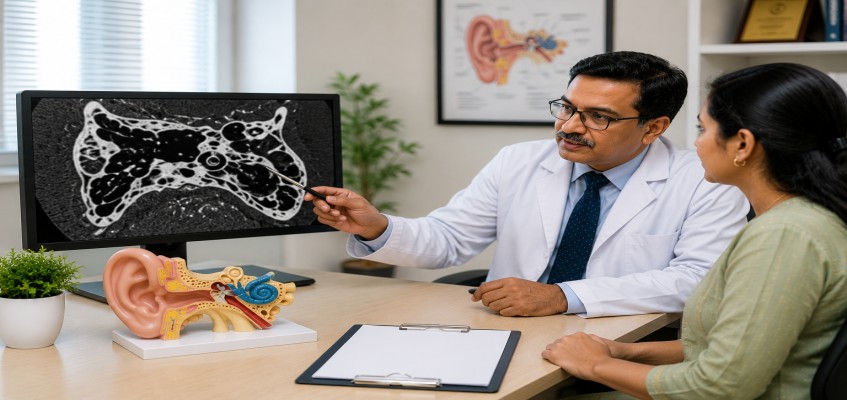
Double ring sign otosclerosis on CT: what it means for early cochlear otosclerosis diagnosis
Double ring sign otosclerosis is a CT scan pattern where the inner ear’s cochlea looks like it has two outlines instead of one. It happens when the bone around the cochlea becomes less dense creating a clear ring around the normal bright cochlear capsule.
Catching double ring sign otosclerosis early matters because it often points to cochlear involvement which can lead to mixed hearing loss or sensorineural hearing loss over time. In this article we explain what radiologists look for on high resolution CT, how this sign differs from other ear conditions and what the next clinical steps usually are for diagnosis and treatment planning.
If you are looking for evaluation at the best ENT Hospital in Kerala, you can connect with Ascent Hospital for comprehensive ear nose and throat care including advanced diagnostic imaging.
Understanding otosclerosis in simple terms
Otosclerosis is a condition where abnormal bone remodeling happens inside the ear. Most people hear about stapes fixation (fenestral otosclerosis) but otosclerosis can also extend deeper around the inner ear structures.
When the process involves the cochlea it is often called cochlear or retrofenestral otosclerosis. This is where double ring sign otosclerosis becomes a valuable imaging clue.
For a broader overview you can read Understanding Otosclerosis.
What exactly is the double ring sign on CT?
On high resolution CT of the temporal bone the normal otic capsule is very dense so it looks bright. In double ring sign otosclerosis there is a second darker ring like halo around the cochlea caused by demineralisation in the pericochlear region. This makes the cochlea appear to have a second outline.
Clinically this sign is associated with cochlear involvement which may correlate with:
-
Progressive hearing loss that is not purely conductive
-
Mixed hearing loss on audiometry
-
Tinnitus in some patients
It is important to note that double ring sign otosclerosis is an imaging sign not a standalone diagnosis. Doctors combine symptoms, hearing tests and CT features to confirm otosclerosis and classify its extent.
Why HRCT temporal bone is used for early diagnosis
Audiometry can strongly suggest otosclerosis but imaging helps when:
-
Hearing loss pattern is atypical
-
There is suspicion of cochlear involvement
-
Surgical planning is needed
-
Differential diagnosis needs clarification
A typical HRCT temporal bone protocol uses very thin sections with a bone algorithm to show tiny bony changes. Subtle cochlear disease can be missed on thicker slices or non targeted scans so using a temporal bone HRCT matters.
In suspected cochlear disease radiologists actively look for double ring sign otosclerosis along with other retrofenestral changes.
CT features to look for (fenestral vs cochlear)
Otosclerosis is commonly described as fenestral or retrofenestral (cochlear). Both can coexist.
Fenestral otosclerosis (classic stapes region)
Common CT clue is a small lucent focus near the oval window at the fissula ante fenestram. This form often correlates with conductive hearing loss.
Cochlear otosclerosis (retrofenestral)
Cochlear involvement shows pericochlear demineralisation. The best known pattern is double ring sign otosclerosis.
Quick comparison table
| Feature | Fenestral otosclerosis | Cochlear otosclerosis (retrofenestral) |
|---|---|---|
| Main area involved | Around oval window and stapes footplate | Around the cochlea and otic capsule |
| Typical CT appearance | Small lucency at fissula ante fenestram | Pericochlear lucent halo and double ring sign otosclerosis |
| Common hearing loss type | Conductive | Mixed or sensorineural |
| Why CT matters | Surgical planning for stapes surgery | Early detection and treatment planning including candidacy for hearing aids or implants |
For condition specific information see Cochlear Otosclerosis.
How doctors use this sign in real world decision making
Seeing double ring sign otosclerosis often changes the clinical conversation from “stapes problem only” to “inner ear involvement may be present”. That can influence management in several ways.
1) Confirming the diagnosis and extent
Your ENT specialist typically correlates CT findings with:
-
Pure tone audiometry and speech testing
-
Tympanometry and acoustic reflexes
-
Symptom timeline and family history
2) Setting realistic expectations from stapes surgery
Stapes surgery can be very effective for fenestral disease. If there is significant cochlear involvement suggested by double ring sign otosclerosis improvement in the conductive component may still occur but residual sensorineural loss can limit overall gain.
3) Planning hearing rehabilitation earlier
Cochlear involvement can mean earlier need for:
-
Digital hearing aids
-
Ongoing monitoring of speech understanding
-
Discussion of implant options in advanced cases
Ascent Hospital is also a dedicated cochlear implantation centre. If implant evaluation is needed you can learn more about the best cochlear implant surgeon in India through Ascent’s cochlear implantation specialty page.
Conditions that can mimic CT changes (why expert interpretation matters)
Temporal bone CT is detailed but inner ear bone disorders can overlap. A specialist read helps reduce misinterpretation.
Some differentials include:
-
Paget disease (more diffuse skull base changes)
-
Osteogenesis imperfecta (systemic bone findings)
-
Labyrinthitis ossificans (often shows ossification rather than lucency)
-
Chronic otitis media complications such as cholesteatoma including canal wall cholesteatoma (typically a middle ear or mastoid destructive soft tissue process rather than a pericochlear halo)
A key point is that double ring sign otosclerosis specifically refers to pericochlear demineralisation around the cochlea in a pattern typical of cochlear otosclerosis.
When should you ask your ENT doctor about CT for otosclerosis?
You can consider discussing imaging if:
-
You have progressive hearing loss with an unclear cause
-
Audiometry suggests mixed loss
-
There is unilateral or asymmetric progression
-
You are planning surgery and want precise anatomic assessment
-
You have tinnitus or dizziness symptoms that need broader evaluation
At Ascent ENT Hospital Kerala patients can access comprehensive ENT specialties and advanced diagnostics with expert ENT surgeons.
Care pathway after diagnosis
Treatment is personalised. Common options include observation hearing aids and surgery for selected patients. In more advanced cochlear involvement cochlear implantation may be considered.
If the CT report mentions double ring sign otosclerosis your ENT specialist may recommend closer follow up for inner ear function and speech understanding. For patients who also need tympanic membrane repair or chronic ear disease management consult an experienced surgeon such as a best tympanoplasty surgeon in kerala.
Conclusion
Double ring sign otosclerosis is a helpful CT scan feature that points toward cochlear involvement and supports early diagnosis of cochlear otosclerosis. When identified on a high resolution temporal bone CT it helps doctors estimate disease extent, guide counselling and plan hearing rehabilitation sooner.
For expert evaluation at the best ENT Hospital in Kerala, visit Ascent Hospital or schedule an appointment with an ENT specialist. To discuss your CT findings and hearing test results you can contact Ascent Hospital and schedule a consultation.
Frequently Asked Questions
Is double ring sign otosclerosis always the same as cochlear otosclerosis?
It is strongly associated with cochlear involvement because it reflects pericochlear demineralisation on CT. Final diagnosis still depends on symptoms, hearing tests and the full CT pattern.
Can double ring sign otosclerosis appear before severe hearing loss?
Yes. Double ring sign otosclerosis can be an early imaging clue even when the hearing loss is mild or mixed and that is why HRCT can support early diagnosis.
Does double ring sign otosclerosis mean I will need a cochlear implant?
Not necessarily. Many people do well with hearing aids or other treatments. Implant evaluation is considered when hearing loss is severe and speech understanding is poor despite well fitted hearing aids.
Which scan is best to see double ring sign otosclerosis?
A dedicated high resolution CT of the temporal bone is typically used to evaluate the otic capsule and look for double ring sign otosclerosis.
Is it safe to delay treatment if CT shows double ring sign otosclerosis?
Management depends on hearing level progression rate symptoms and daily communication needs. An ENT specialist can guide monitoring frequency and rehabilitation timing.
Share
Share on WhatsApp


Our Professionals
 (1) (2).png)
Dr. Sharafudheen. P.K
Chief Consultant ENT & Cochlear Implant Surgeon
MBBS, MS (ENT), DORL DOHNS - RCS Ed (UK)
 (2).jpg)
Dr. Anuradha Varma. M.R
Senior Consultant ENT, Head & Neck Surgeon
MBBS, DLO
.jpeg)
Dr. Bijiraj Vathwam Veettil
Senior Consultant ENT Head & Neck, Sleep Surgeon
MBBS, MS (ENT), Fellowship in Snoring and Sleep apnea Surgeries (Singapore), Fellowship in sinus and skull base surgery
.png)
Dr. Prasanth Parameswaran
Senior Consultant ENT, Head & Neck Surgeon
MBBS, DLO, DNB (ENT), MNAMS, AASC (Specialist - Allergy and Immunotherapy), Fellowship in Snoring and Sleep apnea Surgeries (Singapore).

Dr. Arshad M Razi
Consultant ENT, Head & Neck Surgeon
MBBS, MS (ENT), Fellow in Head & Neck Surgical Oncology

Dr. Deepthi. N.V
Senior Consultant ENT, Head & Neck Surgeon
MBBS, DNB (ENT)


Dr. K Shilpa Nair
ENT Surgeon | Cochlear Implant & Sleep Surgery Specialist
MBBS, MS, DNB, MRCS(Eng), Post doctoral Fellowship in Implantation Otology


Dr. Nibi Shajahan
Consultant ENT, Head & Neck Surgeon
MBBS, MS (ENT), Fellowship in Snoring and Sleep apnea Surgeries (Singapore). Trained in Allergy and Immunotherapy



Dr.Anand Krishnan
Consultant ENT, Head and Neck Surgeon
MBBS ,DLO ,DNB ENT ,MRCS (ENGLAND)





Dr. Seshadri Ganesh. A.L
Senior Consultant Anaesthesiologist
MBBS, DCH, MD, DIP.N.B


Mr. Prasanth. N.P
Senior Audiologist & Speech Language Pathologist
BASLP, MASLP, MSc (Psy)

Ms. Chinju Johny
Audiologist & Speech Language Pathologist
BASLP, MSc (Audiology)



Our Patient Stories
View All Testimonials