Blogs
Tympanosclerosis Treatment Explained: Best Medical and Surgical Methods
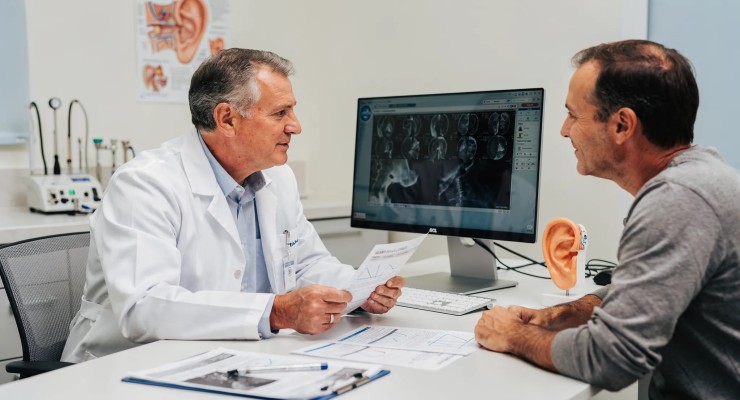
Tympanosclerosis treatment is the care used to manage scarring of the eardrum and middle ear that can follow infections or surgery. The goal of tympanosclerosis treatment is to protect the ear, improve hearing and reduce infections or discomfort.
In many people the scarring is mild and needs no action beyond monitoring. When hearing is affected or infections keep coming back, targeted care can make a real difference. This blog explains the best medical and surgical methods for adults and children, with clear steps to help you choose confidently.
You will learn when medicines and hearing aids are enough, when surgery helps most and what recovery looks like. The overview reflects current ENT best practice, with care pathways used by specialist teams at Ascent Hospital, the best ENT Hospital in Kerala.
Tympanosclerosis Treatment at a Glance
Tympanosclerosis is a build-up of calcium like plaques on the eardrum or in the middle ear. Tympanosclerosis treatment aims to restore or maximize hearing, reduce infections and keep the ear safe from water and pressure injuries. Many cases only need watchful waiting, while others benefit from hearing devices or surgical repair. To get the right guidance and care, it’s important to find the best ear nose and throat clinic.
What is Tympanosclerosis and How Does it Affect Hearing?
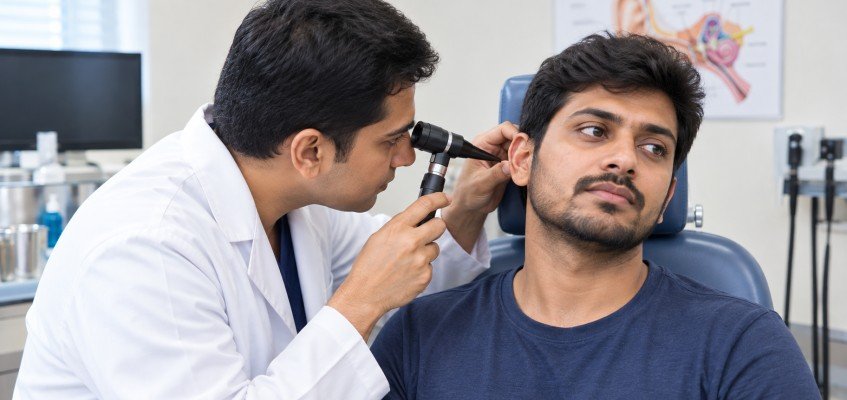
Scarring can stiffen the eardrum so it vibrates less. If plaques extend to the tiny ear bones, sound transmission drops further and a conductive hearing loss can appear. A careful ear exam with otoscopy and hearing tests helps your ENT decide whether you need active care or simple observation.
Medical Options for Tympanosclerosis Treatment
Not every patient needs an operation. Many start with a medical plan designed to protect the ear and support hearing.
-
Observation and ear care: Mild myringosclerosis that does not affect hearing is usually monitored with periodic hearing checks.
-
Treat active infections: If discharge or pain is present, your ENT Doctor may prescribe targeted ear drops or oral medicine. Keeping the ear dry is essential while the infection settles.
-
Manage nasal allergies or sinus disease: Treating nose problems can improve eustachian tube function and reduce middle-ear fluid in select cases.
-
Hearing aids: When scarring causes a stable conductive loss, modern digital devices can deliver excellent clarity. Fitting must be done by a trained audiology team.
These steps are often the first stage of tympanosclerosis treatment, especially when hearing is only mildly reduced. Evidence-based summaries note that surgery is reserved for cases with correctable mechanical issues or significant perforation, while asymptomatic plaque often needs no intervention.
Surgical Methods for Tympanosclerosis Treatment
When hearing loss is significant, when the eardrum has a troublesome perforation, or when plaques fix the tiny ear bones, surgery can improve sound transmission. The choice depends on the site and extent of scarring.
Tympanoplasty (eardrum repair)
If the eardrum is thinned or perforated, tympanoplasty seals the hole with a graft and restores the vibratory surface. In many patients this is the cornerstone of tympanosclerosis treatment when the primary problem is a damaged eardrum. It is usually a day care ENT surgery performed under a microscope or endoscope. Choosing an experienced and highly skilled tympanoplasty surgeon in Kerala can significantly improve surgical outcomes and healing.
Ossiculoplasty (repair or replace tiny ear bones)
When plaques stiffen or erode the malleus or incus, your surgeon may reshape the chain or place a small prosthesis. Ossiculoplasty can be combined with tympanoplasty in the same sitting. This part of tympanosclerosis treatment seeks to rebuild the sound-conducting bridge between the eardrum and the inner ear. Consulting the best ossiculoplasty surgeon in Kerala can help ensure precise reconstruction and better outcomes.
Stapes surgery in selected cases
If scarring fixes the stapes footplate, a stapedectomy may be considered in highly selected patients. This is less common in tympanosclerosis, but it can restore hearing when the stapes is immobile due to plaque. Patients can consult the best stapedectomy surgeon in Kerala to ensure safe and best treatment. If you want to learn about surgical expertise for the stapes, explore more about the best stapedectomy surgeon in India.
Comparing Options for Tympanosclerosis Treatment
| Option | Who it suits | What it involves | Benefits | Considerations | Typical setting |
|---|---|---|---|---|---|
| Observation and ear care | Plaques with normal hearing | Periodic checkups, dry-ear precautions | Avoids unnecessary procedures | Hearing can change over time, needs follow-up | Outpatient clinic |
| Medical therapy | Active infection or inflammation | Targeted drops or tablets, nasal care | Controls infection, protects ear | Does not reverse scarring | Outpatient clinic |
| Hearing aids | Stable conductive loss not ideal for surgery | Device fitting and tuning | Improves clarity and daily function | Device care needed, costs vary | Audiology clinic |
| Tympanoplasty | Perforated or severely thinned eardrum | Eardrum graft under microscope or endoscope | Seals ear, improves vibration, reduces infections | Surgery risks, recovery time | Day care surgery |
| Ossiculoplasty | Ossicle damage or fixation | Reshape or replace tiny bones | Restores sound bridge for better hearing | Results depend on middle-ear health | Day care surgery |
| Stapes surgery | Stapes fixed by plaque in select cases | Create small opening, place prosthesis | Can significantly improve hearing | Not for all patients | Day care surgery |
How Your ENT Decides on the Best Path
Choosing the right tympanosclerosis treatment starts with a thorough assessment.
-
History and exam: Ear infections, prior surgery, noise exposure and general health are reviewed. A microscope or endoscope exam maps plaque and perforation.
-
Hearing tests: Pure-tone audiometry and tympanometry show how well sound moves through the middle ear.
-
Imaging if needed: A CT scan may be used when ossicle fixation or other middle-ear disease is suspected.
-
Discussion of goals: Together you and your ENT agree on the best balance between medical care, hearing devices and surgery.
A clear, shared plan often begins with conservative steps. If hearing does not meet your needs, surgical tympanosclerosis treatment is scheduled with a realistic understanding of expected benefits, follow-up and ear protection.
Why Choose Ascent for Tympanosclerosis Treatment
Ascent Hospital is Kerala’s first ISO and NABH accredited ENT specialty hospital with comprehensive ear, nose, throat, head and neck services. Patients seeking advanced tympanosclerosis treatment benefit from:
-
Experienced ENT surgeons with high-volume ear surgery practice
-
Advanced diagnostic imaging and a dedicated balance and vertigo clinic
-
Day care ENT surgeries with modern microscopes and endoscopes
-
A cochlear implantation center for eligible patients with severe hearing loss
If you are in North Kerala, access care at Ascent Hospital Calicut or Perinthalmanna. For Central Kerala, visit Ascent Hospital Palakkad. You can also learn more about cochlear implant options at our clinics as we are the best cochlear implantation hospital in Kerala. If you need a best ENT surgeon in Kerala, the teams at Ascent ENT Hospital Kerala are ready to help.
Safety, Recovery and Results
Most ear surgeries for tympanosclerosis are completed as day care procedures. After surgery you will need to keep the ear dry, avoid nose blowing forcefully and attend follow-up visits. Many patients notice hearing improvement once packing is removed and the ear heals, although final results may take several weeks. Your surgeon will explain realistic expectations for your specific ear. Complications are uncommon but can include infection, taste disturbance or dizziness for a short period. Long-term protection of the ear from water and prompt treatment of colds help safeguard your result.
Key takeaways
-
Tympanosclerosis treatment ranges from simple observation to advanced ear surgery
-
Medical care protects the ear and treats infections, but it does not remove plaque
-
Surgery, including tympanoplasty and ossiculoplasty, can improve sound conduction when anatomy is correctable
-
Hearing aids are an effective non-surgical option for many patients
-
The best plan is personalized after exam, hearing tests and a clear discussion of goals
Ascent Hospital delivers evidence-based tympanosclerosis treatment with advanced diagnostics, skilled surgeons and convenient day care procedures. Book a consultation today, if you or your child has ear scarring or conductive hearing loss, Contact the team now to plan the next steps with confidence.
Frequently Asked Questions
Does every case need treatment?
No, if hearing is normal and there are no infections your ENT will usually advise monitoring.
Can medicines dissolve the plaques?
No, medicines can treat infection and inflammation but they do not reverse the scarring.
Are hearing aids a permanent solution?
They are a reliable option for stable conductive loss and can be adjusted over time as needs change.
When is surgery the better choice?
If eardrum perforation persists or ossicles are fixed and hearing loss affects daily life, surgery may offer a clearer improvement.
Is stapes surgery common in tympanosclerosis?
It is reserved for select patients when the stapes is truly fixed by plaque after careful testing.
Will I need a cochlear implant?
Cochlear implants are for severe inner-ear hearing loss. Tympanosclerosis usually causes conductive loss, so implants are considered only if the inner ear is significantly affected and other options are not suitable.
Share


Our Professionals
 (1) (2).png)
Dr. Sharafudheen. P.K
Chief Consultant ENT & Cochlear Implant Surgeon
MBBS, MS (ENT), DORL DOHNS - RCS Ed (UK)
 (2).jpg)
Dr. Anuradha Varma. M.R
Senior Consultant ENT, Head & Neck Surgeon
MBBS, DLO
.jpeg)
Dr. Bijiraj Vathwam Veettil
Senior Consultant ENT Head & Neck, Sleep Surgeon
MBBS, MS (ENT), Fellowship in Snoring and Sleep apnea Surgeries (Singapore), Fellowship in sinus and skull base surgery
.png)
Dr. Prasanth Parameswaran
Senior Consultant ENT, Head & Neck Surgeon
MBBS, DLO, DNB (ENT), MNAMS, AASC (Specialist - Allergy and Immunotherapy), Fellowship in Snoring and Sleep apnea Surgeries (Singapore).

Dr. Arshad M Razi
Consultant ENT, Head & Neck Surgeon
MBBS, MS (ENT), Fellow in Head & Neck Surgical Oncology

Dr. Deepthi. N.V
Senior Consultant ENT, Head & Neck Surgeon
MBBS, DNB (ENT)


Dr. K Shilpa Nair
ENT Surgeon | Cochlear Implant & Sleep Surgery Specialist
MBBS, MS, DNB, MRCS(Eng), Post doctoral Fellowship in Implantation Otology


Dr. Nibi Shajahan
Consultant ENT, Head & Neck Surgeon
MBBS, MS (ENT), Fellowship in Snoring and Sleep apnea Surgeries (Singapore). Trained in Allergy and Immunotherapy



Dr.Anand Krishnan
Consultant ENT, Head and Neck Surgeon
MBBS ,DLO ,DNB ENT ,MRCS (ENGLAND)




Dr. Seshadri Ganesh. A.L
Senior Consultant Anaesthesiologist
MBBS, DCH, MD, DIP.N.B


Mr. Prasanth. N.P
Senior Audiologist & Speech Language Pathologist
BASLP, MASLP, MSc (Psy)

Ms. Chinju Johny
Audiologist & Speech Language Pathologist
BASLP, MSc (Audiology)



Our Patient Stories
View All Testimonials