Blogs
Somatic Tinnitus: Causes, Symptoms and Effective Treatment Options
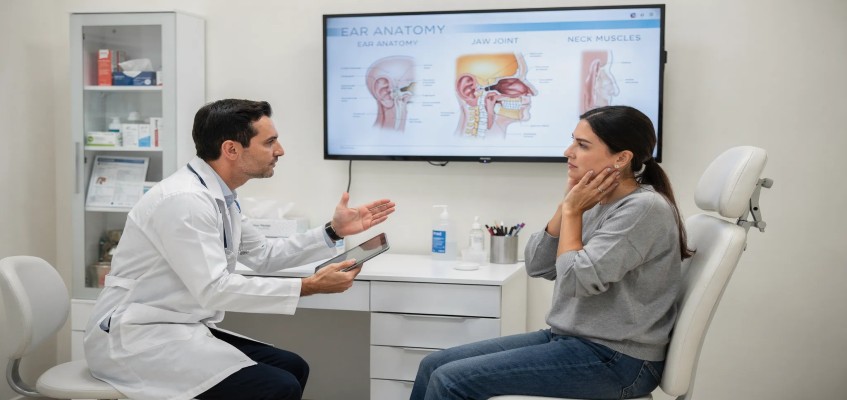
Somatic tinnitus is a type of ringing or buzzing in the ears that changes when you move or tense parts of your body such as your jaw or neck. It is a real sound perception even though there is no external noise source.
In this article, we look at somatic tinnitus through a practical clinical lens: why it happens, what patterns of symptoms are typical and which treatments tend to work best when body signals are driving the tinnitus. You will learn how ear pathways connect with jaw and neck nerves and why that matters for diagnosis.
If your tinnitus gets louder when you clench your teeth or turn your head, you may be dealing with somatic tinnitus. The good news is that targeted care can reduce symptoms in many people, especially when you address the underlying trigger early.
Understanding somatic tinnitus
Many people think tinnitus always starts in the ear. With somatic tinnitus, the ear may be normal but nerve signals from the jaw, face, neck or upper back can influence hearing pathways in the brainstem. This is sometimes called “somatosensory modulation.” Research suggests that sensory input from the trigeminal system and cervical nerves can interact with auditory processing regions such as the dorsal cochlear nucleus, which helps explain why movement can change tinnitus loudness or pitch.
What makes somatic tinnitus different from other tinnitus?
A key feature of somatic tinnitus is that it is modifiable. The sound may change when you:
-
Clench your jaw or grind your teeth
-
Open your mouth wide
-
Press on facial or neck muscles
-
Turn your head or change posture
That does not mean it is “all in your head.” It means your tinnitus is partly driven by body based sensory inputs. For background on general tinnitus types and triggers, you can also read Tinnitus causes symptoms and cure.
What causes somatic tinnitus?
Somatic tinnitus often has more than one contributing factor. Common causes include:
Temporomandibular joint (TMJ) issues
Jaw joint inflammation malocclusion or chronic clenching can irritate nearby muscles and the trigeminal nerve. TMJ disorders are among the most frequent drivers of somatic tinnitus because the jaw joint sits so close to ear structures and shares nerve networks.
Neck problems and muscle tension
Cervical spine strain, poor posture, long hours at a desk or previous whiplash can increase muscle tension and alter sensory input from the upper neck. In some people, treating neck dysfunction reduces somatic tinnitus intensity.
Dental factors
Bruxism (teeth grinding) recent dental work bite changes or poorly fitting appliances can contribute to jaw muscle overactivity and tinnitus modulation.
Ear conditions that coexist
Even when tinnitus is strongly modulated by movement, you still need to rule out ear disease. Wax impaction middle ear infection Eustachian tube dysfunction or inner ear issues can coexist and amplify symptoms. If you suspect infection or pain, consult an ENT. For related guidance, see Best Doctor for Ear Infection in Kerala.
Somatic tinnitus symptoms: what do people notice day to day?
People describe somatic tinnitus symptoms in several consistent patterns:
-
Ringing buzzing hissing or clicking in one ear or both
-
Noticeable change in loudness or pitch with jaw movement neck rotation or muscle pressure
-
Jaw pain popping or limited mouth opening
-
Neck stiffness headaches or shoulder tightness
-
Symptoms that worsen with stress fatigue or long screen time due to muscle tension
Not every case is the same. Some patients have classic hearing loss related tinnitus plus a somatic component. Others have normal hearing tests but still have intrusive sound perception.
Can you tell if it is somatic tinnitus?
These quick checks can suggest somatic tinnitus but they are not a diagnosis:
-
Gently clench your teeth for 3 to 5 seconds. Does the sound change?
-
Slowly turn your head left and right. Does intensity shift at certain angles?
-
Open your mouth wide then relax. Any change in pitch?
If these actions reliably modulate the sound, somatic tinnitus becomes more likely. If you also have sudden hearing changes, dizziness, severe ear pain or one sided pulsating sound, you should seek medical evaluation promptly.
How is somatic tinnitus diagnosed by an ENT?
A thorough ENT evaluation matters because treatment depends on the true driver. A typical workup includes:
-
Detailed history about onset modulation jaw symptoms neck pain noise exposure sleep and stress
-
Ear examination to rule out blockage infection or middle ear problems
-
Hearing assessment (audiology) to identify hearing loss patterns
-
Targeted assessment of the jaw joint bite and cervical muscle tenderness
-
Imaging when indicated based on red flags or exam findings
Quick comparison table: somatic vs other common tinnitus patterns
| Feature | Somatic tinnitus | Hearing loss related tinnitus | Middle ear or conductive causes |
|---|---|---|---|
| Changes with jaw or neck movement | Often yes | Usually no | Usually no |
| Common symptoms | Jaw pain, neck stiffness, headaches | Difficulty hearing, speech sound sensitivity | Fullness, popping, ear pain |
| Key tests | ENT exam, audiology, jaw and neck assessment | Audiology and ENT evaluation | Otoscopy, tympanometry, hearing tests |
| Main treatment focus | Treat musculoskeletal trigger plus tinnitus care | Hearing rehabilitation plus tinnitus care | Treat underlying ear condition |
Effective treatment options for somatic tinnitus
Because somatic tinnitus sits at the intersection of ENT care and musculoskeletal care, the most effective plans are often combined. The goal is to reduce the abnormal sensory input that is “turning up” the tinnitus signal and to lower the brain’s attention and stress response to the sound.
1) Treat the jaw neck or muscle trigger
Depending on findings, your clinician may recommend:
-
TMJ focused care (jaw rest strategies bite assessment dental referral when needed)
-
Physiotherapy for cervical spine mobility posture correction and muscle release
-
Treatment for bruxism such as a dentist supervised night guard when appropriate
-
Trigger point management and stretching routines guided by a professional
When the source is mechanical, addressing it can reduce somatic tinnitus and also improve headaches, jaw pain and sleep quality.
2) Manage ear and hearing contributors
Even in somatic tinnitus, hearing status influences how intrusive tinnitus feels. ENT led management may include wax removal infection treatment or assessment for hearing devices.
If hearing loss is present, properly fitted hearing aids can reduce tinnitus prominence for many patients by improving ambient sound input. Ascent also offers advanced ear care services and audiology support. Learn more about specialist care at Ascent Hospital and options for Best Tinnitus Treatment in Kerala.
3) Evidence based tinnitus therapies that help regardless of cause
Even after treating the trigger, tinnitus can persist due to central sensitisation. Effective supportive treatments include:
-
Sound therapy (background sound apps wearable sound generators or hearing aids when indicated)
-
Cognitive behavioural therapy based tinnitus counselling (strong evidence for reducing distress)
-
Sleep support and stress reduction strategies because stress can amplify somatic tinnitus perception
4) When should you seek urgent care?
Seek urgent evaluation if tinnitus is accompanied by:
-
Sudden hearing loss in one ear
-
Severe vertigo new neurological symptoms or facial weakness
-
Pulsatile tinnitus that matches your heartbeat
-
Significant ear pain fever or discharge
If you are unsure, an ENT assessment is the safest next step. If your symptoms started abruptly, you may also find this helpful: Why is My Ear Ringing All of a Sudden?
Why choose Ascent for somatic tinnitus care in Kerala?
Because somatic tinnitus may involve the ear plus jaw and neck factors, you benefit from a hospital that can coordinate diagnostics and treatment. Ascent ENT Hospital Kerala is widely recognised as a best ENT Hospital in Kerala with specialised services in audiology balance care and advanced diagnostics.
Ascent Hospital provides comprehensive ear nose and throat care with 24/7 ENT emergency support. If you are looking for a best ear surgeon in Kerala, a best ENT surgeon in Kerala, an ENT clinic in Kerala or a best ENT Clinic, you can start with Ascent Hospital.
For location specific access, you can also explore Ascent Hospital Palakkad or Ascent Hospital Calicut.
Key takeaways
Somatic tinnitus is tinnitus that changes with jaw neck or muscle movement. Common drivers include TMJ dysfunction neck strain muscle tension and bruxism though ear conditions can coexist. The most effective approach combines ENT evaluation with targeted treatment of the musculoskeletal trigger plus evidence-based tinnitus therapies such as sound therapy and counselling.
If your somatic tinnitus symptoms are persistent or affecting sleep focus or quality of life, do not self diagnose. Book an ENT evaluation with Ascent Hospital and discuss a personalised plan for somatic tinnitus management.
Ready to take the next step? Schedule a consultation through the Ascent Hospital contact page and get expert guidance from one of the leading ENT teams in Kerala.
Share
Share on WhatsApp

Our Professionals
 (1) (2).png)
Dr. Sharafudheen. P.K
Chief Consultant ENT & Cochlear Implant Surgeon
MBBS, MS (ENT), DORL DOHNS - RCS Ed (UK)
 (2).jpg)
Dr. Anuradha Varma. M.R
Senior Consultant ENT, Head & Neck Surgeon
MBBS, DLO
.jpeg)
Dr. Bijiraj Vathwam Veettil
Senior Consultant ENT Head & Neck, Sleep Surgeon
MBBS, MS (ENT), Fellowship in Snoring and Sleep apnea Surgeries (Singapore), Fellowship in sinus and skull base surgery
.png)
Dr. Prasanth Parameswaran
Senior Consultant ENT, Head & Neck Surgeon
MBBS, DLO, DNB (ENT), MNAMS, AASC (Specialist - Allergy and Immunotherapy), Fellowship in Snoring and Sleep apnea Surgeries (Singapore).

Dr. Arshad M Razi
Consultant ENT, Head & Neck Surgeon
MBBS, MS (ENT), Fellow in Head & Neck Surgical Oncology

Dr. Deepthi. N.V
Senior Consultant ENT, Head & Neck Surgeon
MBBS, DNB (ENT)


Dr. K Shilpa Nair
ENT Surgeon | Cochlear Implant & Sleep Surgery Specialist
MBBS, MS, DNB, MRCS(Eng), Post doctoral Fellowship in Implantation Otology


Dr. Nibi Shajahan
Consultant ENT, Head & Neck Surgeon
MBBS, MS (ENT), Fellowship in Snoring and Sleep apnea Surgeries (Singapore). Trained in Allergy and Immunotherapy



Dr.Anand Krishnan
Consultant ENT, Head and Neck Surgeon
MBBS ,DLO ,DNB ENT ,MRCS (ENGLAND)





Dr. Seshadri Ganesh. A.L
Senior Consultant Anaesthesiologist
MBBS, DCH, MD, DIP.N.B


Mr. Prasanth. N.P
Senior Audiologist & Speech Language Pathologist
BASLP, MASLP, MSc (Psy)

Ms. Chinju Johny
Audiologist & Speech Language Pathologist
BASLP, MSc (Audiology)



Our Patient Stories
View All Testimonials