Blogs
Hearing Loss During Cold: Why It Happens and How to Manage It
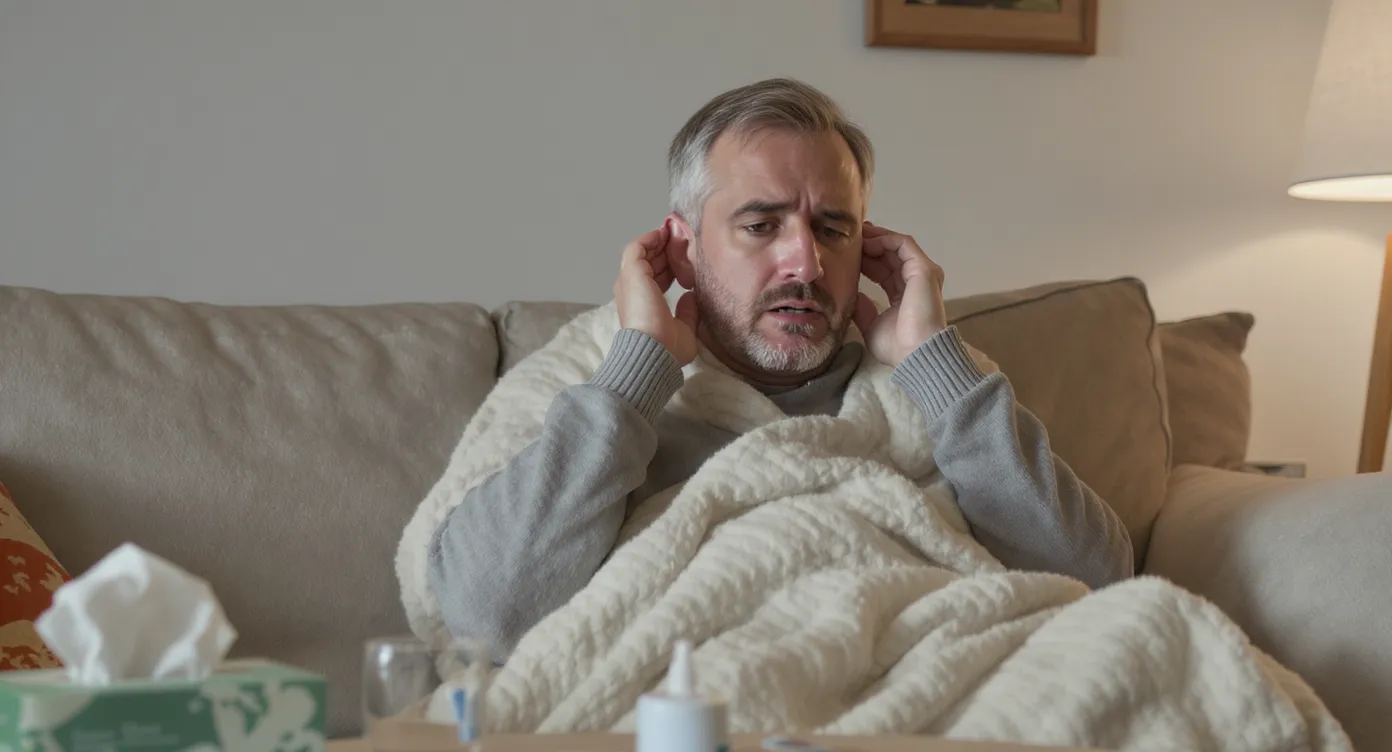
Seasonal colds are annoying enough without the muffled sounds that often follow a sneezing fit. If you have ever noticed voices becoming distant or your favourite song losing its sparkle, you are not alone. Hearing loss during cold episodes is common, usually temporary, yet it can feel alarming when it strikes.
How a Simple Cold Affects Your Ears
A common cold inflames the upper airway, including the nose, throat and Eustachian tube (the narrow canal that keeps air pressure equal on both sides of the eardrum). When this tube swells or fills with mucus, pressure builds up in the middle ear, sound vibrations cannot travel freely and hearing loss during cold becomes noticeable.
Other pathways also play a role: sinus congestion dampens resonance in the head, while coughing forces fluid toward the middle ear. The resulting conductive hearing loss during cold can reduce hearing by 20-30 dB, similar to plugging your ears with cotton.
Key Reasons You Might Struggle to Hear
-
Blocked Eustachian tube causing negative pressure
-
Fluid collection (serous otitis media)
-
Swollen nasal passages altering airflow and resonance
-
In rare cases, virus-triggered inflammation of the inner ear
Symptoms to Watch
While every head cold is unique, the signs of hearing loss during cold follow a clear pattern. Use the table below to track your symptoms and decide when medical help is wise.
| Symptom | Typical in mild cold | Red flag needing ENT review |
|---|---|---|
| Muffling or fullness in one or both ears | Yes | Persists longer than two weeks |
| Ear pain or pressure | Occasional | Sharp pain, especially with fever |
| Tinnitus (ringing) | Light buzzing | Sudden loud ringing or dizziness |
| Vertigo or balance issues | Rare | Recurrent spinning sensation |
| Fluid discharge | No | Any fluid leaking from the ear |
If red-flag signs appear, schedule an appointment with an ENT specialist at Ascent Hospital, the best ENT Hospital in Kerala, for a precise diagnosis.
Home Management Tips
Most cases of hearing loss during cold improve as congestion clears. The following evidence-based steps ease pressure and speed recovery.
1. Keep the Eustachian Tube Open
-
Practice gentle yawning or swallowing exercises
-
Chew sugar-free gum to activate the muscles that open the tube
2. Reduce Nasal Swelling
-
Use isotonic saline sprays three to four times daily
-
Consider short courses of decongestant drops (no longer than five days) after consulting an ENT doctor
3. Steam Inhalation
Warm moist air thins mucus and improves tube ventilation. Lean over a bowl of hot water, cover your head with a towel and breathe slowly for 5-7 minutes.
4. Adequate Hydration and Rest
Water thins secretions, and quality sleep supports immune recovery, helping temporary hearing loss during cold resolve sooner.
When to Seek Professional Help
Visit an ENT clinic in Kerala if:
-
Hearing loss during cold lasts beyond two weeks
-
Ear pain is severe or you develop fever above 38 °C
-
You experience spinning vertigo, facial weakness or sudden hearing drop in one ear
Ascent ENT Hospital Kerala provides 24 hrs emergency ENT care where board-certified surgeons use microscopic ear examination and impedance audiometry to pinpoint the cause.
Medical Treatments Available
Persistent fluid or bacterial infection may require targeted intervention:
-
Myringotomy with grommet insertion releases trapped fluid and equalises pressure.
-
Oral or topical antibiotics treat acute otitis media confirmed by examination.
-
Oral steroids (short course) reduce severe Eustachian tube inflammation when prescribed by the best ENT surgeon in Kerala.
-
Hearing support devices like digital aids bridge the gap if recovery is slow. Ascent maintains a dedicated fitting suite staffed by audiologists.
For patients with long-standing conductive damage, Ascent is also recognised as a leading Cochlear implantation hospital in Kerala, home to the best cochlear implant surgeons in India.
Recovery Timeline
Most adults regain normal hearing within 7-14 days. Children, whose Eustachian tubes are shorter and more horizontal, may need three weeks. Early ENT evaluation shortens this timeline and prevents complications like chronic otitis media or cholesteatoma.
Key Takeaways
-
Hearing loss during cold is typically caused by Eustachian tube blockage and middle-ear fluid build-up.
-
Steam inhalation, saline sprays, hydration and rest are first-line home measures.
-
Consult Ascent ENT Hospital if hearing loss during cold persists beyond two weeks, is accompanied by pain or vertigo, or affects daily function.
-
ISO and NABH accredited Ascent Hospital offers advanced diagnostics, microscopic ear surgery and cochlear implantation, making it the best ear specialist hub in Kerala.
Ready to hear clearly again? Contact our expert ENT team now. Book your consultation at Ascent Hospital and reclaim crystal-clear hearing.
Frequently Asked Questions
Is hearing loss during cold permanent?
In the vast majority of cases, no. It is a temporary conductive issue that improves once congestion clears.
Why does only one ear feel blocked?
Anatomy varies. Slight deviation of the nasal septum or a past ear infection can make one Eustachian tube narrower, causing unilateral symptoms.
Can I fly with a cold if my ears are blocked?
It is safer to postpone. Cabin pressure changes may worsen pain or cause eardrum injury. If travel is unavoidable, use nasal spray 30 minutes before take-off and practise swallowing during descent.
Do over-the-counter ear drops help?
Standard wax-solvent drops will not reach the middle ear. Focus on nasal decongestion and seek ENT advice before applying any medicated drops.
Share
Share on WhatsApp


Our Professionals
 (1) (2).png)
Dr. Sharafudheen. P.K
Chief Consultant ENT & Cochlear Implant Surgeon
MBBS, MS (ENT), DORL DOHNS - RCS Ed (UK)
 (2).jpg)
Dr. Anuradha Varma. M.R
Senior Consultant ENT, Head & Neck Surgeon
MBBS, DLO
.jpeg)
Dr. Bijiraj Vathwam Veettil
Senior Consultant ENT Head & Neck, Sleep Surgeon
MBBS, MS (ENT), Fellowship in Snoring and Sleep apnea Surgeries (Singapore), Fellowship in sinus and skull base surgery
.png)
Dr. Prasanth Parameswaran
Senior Consultant ENT, Head & Neck Surgeon
MBBS, DLO, DNB (ENT), MNAMS, AASC (Specialist - Allergy and Immunotherapy), Fellowship in Snoring and Sleep apnea Surgeries (Singapore).

Dr. Arshad M Razi
Consultant ENT, Head & Neck Surgeon
MBBS, MS (ENT), Fellow in Head & Neck Surgical Oncology

Dr. Deepthi. N.V
Senior Consultant ENT, Head & Neck Surgeon
MBBS, DNB (ENT)


Dr. K Shilpa Nair
ENT Surgeon | Cochlear Implant & Sleep Surgery Specialist
MBBS, MS, DNB, MRCS(Eng), Post doctoral Fellowship in Implantation Otology


Dr. Nibi Shajahan
Consultant ENT, Head & Neck Surgeon
MBBS, MS (ENT), Fellowship in Snoring and Sleep apnea Surgeries (Singapore). Trained in Allergy and Immunotherapy



Dr.Anand Krishnan
Consultant ENT, Head and Neck Surgeon
MBBS ,DLO ,DNB ENT ,MRCS (ENGLAND)





Dr. Seshadri Ganesh. A.L
Senior Consultant Anaesthesiologist
MBBS, DCH, MD, DIP.N.B


Mr. Prasanth. N.P
Senior Audiologist & Speech Language Pathologist
BASLP, MASLP, MSc (Psy)

Ms. Chinju Johny
Audiologist & Speech Language Pathologist
BASLP, MSc (Audiology)



Our Patient Stories
View All Testimonials