Blogs
Glomus Tumor in Middle Ear: Symptoms, Causes, Diagnosis and Treatment
.jpg)
A glomus tumor in middle ear is an unusual growth that starts from small nerve related cells around blood vessels near the ear. It is usually non cancerous but it can still cause significant symptoms because it is highly vascular and grows in a tight space.
If you or a family member has pulsating noise in the ear or new hearing loss it is worth understanding how this condition presents and how doctors confirm it. This article explains the common symptoms, likely causes, the tests used for diagnosis and today’s treatment options so you know what to expect and when to seek specialist care.
Understanding a glomus tumor in middle ear
A glomus tumor in middle ear is also called a middle ear paraganglioma. Many cases arise in the area of the middle ear space close to the eardrum and hearing bones. These tumors are made up of cells that are naturally associated with nerves and blood vessels which explains why they often look reddish behind the eardrum and why they can bleed easily.
Even when benign, a glomus tumor in middle ear can gradually affect hearing and balance. In some cases it can extend into nearby areas of the temporal bone. That is why accurate imaging and careful treatment planning matter.
What are the early symptoms of glomus tumor in middle ear?
Symptoms often start subtly. The most common early complaint is pulsatile tinnitus which is a rhythmic whooshing or beating sound that may match your pulse.
Typical symptoms of a glomus tumor in middle ear include:
-
Pulsatile tinnitus in one ear
-
Gradually worsening hearing loss, usually conductive hearing loss
-
A feeling of ear fullness or pressure
-
Occasional ear pain
-
Episodes of ear bleeding or blood stained discharge, less common but important
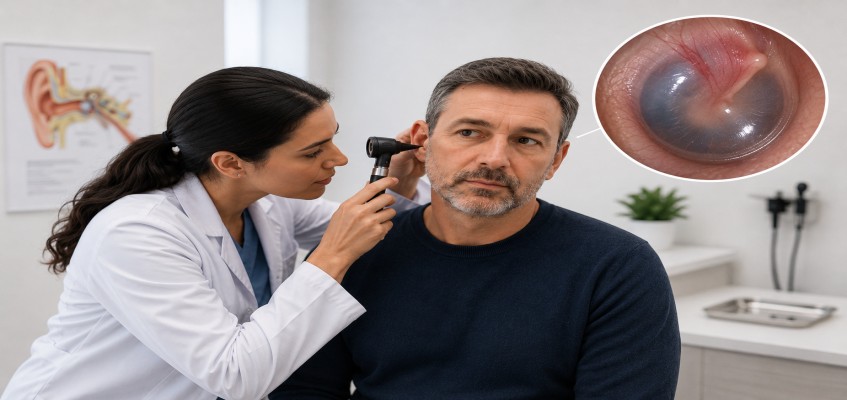
On examination, doctors may see a red or bluish pulsating mass behind the eardrum. Some people notice symptoms for months or even years before diagnosis.
Can a glomus tumor in middle ear cause dizziness or facial weakness?
Yes, it can, especially if the tumor grows beyond the early stage. A larger glomus tumor in middle ear may be associated with:
-
Vertigo or imbalance
-
Ringing that becomes louder over time
-
Weakness of facial muscles on the same side, in advanced cases
These symptoms need prompt evaluation since they can overlap with other ear and nerve conditions.
When should you seek urgent ENT care?
Seek urgent assessment if you have ear bleeding, sudden significant hearing change, severe vertigo or new facial weakness. A hospital with 24/7 ENT emergency support can help rule out dangerous causes and guide next steps.
What causes glomus tumor in middle ear?
In many patients, the exact trigger is not known. A glomus tumor in middle ear is often sporadic, meaning it happens without a clear inherited cause.
However, some cases are linked to inherited gene changes, commonly involving SDH genes. If there is a family history of paragangliomas or similar tumors, your ENT specialist may suggest genetic counselling or testing.
Other points doctors consider during evaluation include:
-
Age and sex, these tumors are often diagnosed in adults and may be more common in women
-
Whether the tumor is producing hormones, this is uncommon for middle ear lesions but can be checked if symptoms suggest so.
How is glomus tumor in middle ear diagnosed?
Diagnosing a glomus tumor in middle ear usually involves a careful clinical exam plus hearing tests and imaging. Because these tumors are vascular, biopsy is typically avoided unless an ENT surgeon specifically recommends it.
Common tests used
| Test | What it evaluates | Why it matters for suspected glomus tumor in middle ear |
|---|---|---|
| Otoscopy or microscope ear exam | Eardrum and middle ear appearance | May reveal a reddish pulsatile mass behind the eardrum |
| Pure tone audiometry | Hearing levels and type of hearing loss | Helps detect conductive hearing loss patterns |
| Tympanometry | Eardrum movement and middle ear pressure | Supports middle ear involvement and rule outs fluid |
| CT scan of temporal bone | Bone detail and extent | Shows bony changes and surgical anatomy |
| MRI with contrast | Soft tissue extent | Defines tumor size and spread to nearby structures |
| Angiography in selected cases | Blood supply | May guide pre operative embolisation planning |
Advanced diagnostic imaging is especially useful for treatment planning, including deciding whether observation, surgery or radiotherapy is best.
Treatment options for glomus tumor in middle ear
Treatment depends on tumor size, symptoms, hearing status, age, medical fitness and patient preference. Your ENT team will also consider how close the tumor is to nerves and major blood vessels.
The main treatment pathways for a glomus tumor in middle ear include observation, surgery and radiotherapy.
When is observation appropriate?
If the tumor is small, symptoms are mild and growth appears slow, careful observation may be advised. This generally includes regular ear exams, hearing tests and periodic imaging. Observation can be a reasonable choice for select patients, especially when surgical risk is high.
Surgery for glomus tumor in middle ear
Surgery aims to remove the tumor and preserve function where possible. A glomus tumor in middle ear may sometimes be removed through ear surgery approaches chosen based on its position and extent.
Because these tumors are vascular, surgeons plan carefully to control bleeding. In some cases, pre operative embolisation may be discussed to reduce blood supply before surgery.
Possible risks vary by case and should be reviewed in detail with your surgeon. They can include hearing change, taste disturbance, dizziness and rare nerve related complications.
Radiotherapy and stereotactic options
Radiotherapy does not physically remove the tumor but it can control growth and reduce symptoms in many patients. For a glomus tumor in middle ear, radiotherapy may be considered when:
-
The tumor is not ideal for surgery
-
The patient prefers a non surgical approach
-
There is residual tumor after surgery
Your team will explain expected outcomes, follow up imaging needs and potential side effects.
Hearing support after treatment
Some people need hearing rehabilitation after treatment for a glomus tumor in middle ear. Options may include hearing aids or other hearing solutions based on the type and degree of loss.
Where to get expert care in Kerala
Because diagnosis and treatment planning can be complex, it helps to consult an experienced ENT team. Ascent Hospital is widely known as a best ENT Hospital in Kerala for comprehensive ear, nose and throat care with advanced technology and specialist doctors.
You can learn more about services at:
-
Ascent ENT Hospital Kerala for comprehensive ENT care and patient support
-
A trusted ENT clinic in Kerala for evaluation of pulsatile tinnitus and hearing loss
-
Access to a Best ENT surgeon in kerala for personalised surgical counselling
-
A patient focused Best ENT Clinic for appointment booking and follow up care
What does follow up look like after treatment?
Follow up is important because recurrence or residual disease can occur depending on tumor size and extent. Your doctor may recommend periodic hearing tests and imaging at set intervals.
If you have been treated for a glomus tumor in middle ear, contact your ENT specialist if pulsatile tinnitus returns, hearing worsens or you develop new dizziness.
Conclusion
A glomus tumor in middle ear is a rare vascular growth that commonly presents with pulsatile tinnitus and progressive hearing loss. Diagnosis typically includes a detailed ENT exam, hearing evaluation and imaging such as CT and MRI. Treatment may involve observation, surgery or radiotherapy depending on the tumor’s size, symptoms and overall health factors.
If you have symptoms that suggest a glomus tumor in middle ear, do not wait for them to worsen. Consult the team at Ascent Hospital, recognised by many patients as the best ENT Hospital in Kerala, for accurate diagnosis and the right treatment plan.
Ready to speak with an ENT specialist? Schedule a consultation or contact us to get expert guidance on your next step.
Share
Share on WhatsApp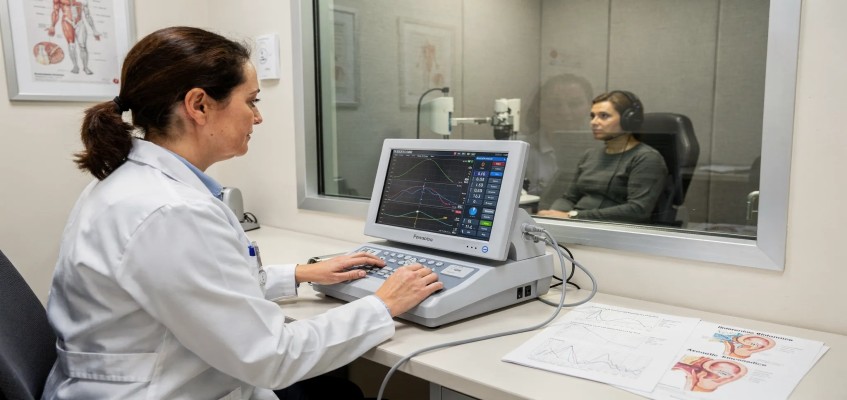

Our Professionals
 (1) (2).png)
Dr. Sharafudheen. P.K
Chief Consultant ENT & Cochlear Implant Surgeon
MBBS, MS (ENT), DORL DOHNS - RCS Ed (UK)
 (2).jpg)
Dr. Anuradha Varma. M.R
Senior Consultant ENT, Head & Neck Surgeon
MBBS, DLO
.jpeg)
Dr. Bijiraj Vathwam Veettil
Senior Consultant ENT Head & Neck, Sleep Surgeon
MBBS, MS (ENT), Fellowship in Snoring and Sleep apnea Surgeries (Singapore), Fellowship in sinus and skull base surgery
.png)
Dr. Prasanth Parameswaran
Senior Consultant ENT, Head & Neck Surgeon
MBBS, DLO, DNB (ENT), MNAMS, AASC (Specialist - Allergy and Immunotherapy), Fellowship in Snoring and Sleep apnea Surgeries (Singapore).

Dr. Arshad M Razi
Consultant ENT, Head & Neck Surgeon
MBBS, MS (ENT), Fellow in Head & Neck Surgical Oncology

Dr. Deepthi. N.V
Senior Consultant ENT, Head & Neck Surgeon
MBBS, DNB (ENT)


Dr. K Shilpa Nair
ENT Surgeon | Cochlear Implant & Sleep Surgery Specialist
MBBS, MS, DNB, MRCS(Eng), Post doctoral Fellowship in Implantation Otology


Dr. Nibi Shajahan
Consultant ENT, Head & Neck Surgeon
MBBS, MS (ENT), Fellowship in Snoring and Sleep apnea Surgeries (Singapore). Trained in Allergy and Immunotherapy



Dr.Anand Krishnan
Consultant ENT, Head and Neck Surgeon
MBBS ,DLO ,DNB ENT ,MRCS (ENGLAND)





Dr. Seshadri Ganesh. A.L
Senior Consultant Anaesthesiologist
MBBS, DCH, MD, DIP.N.B


Mr. Prasanth. N.P
Senior Audiologist & Speech Language Pathologist
BASLP, MASLP, MSc (Psy)

Ms. Chinju Johny
Audiologist & Speech Language Pathologist
BASLP, MSc (Audiology)




Our Patient Stories
View All Testimonials