Blogs
Bone Conduction Test: Purpose, Procedure and Results
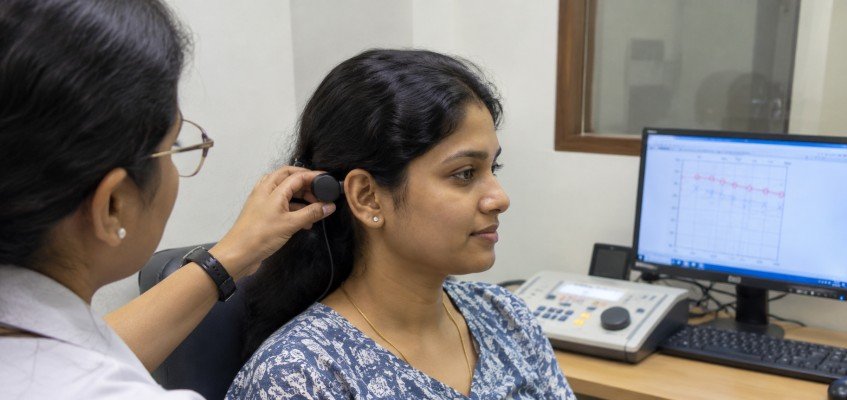
A bone conduction test is a hearing test that checks how well sound reaches the inner ear through the bones of the skull. It helps hearing specialists understand whether hearing difficulty is linked to the outer or middle ear or whether it may involve the inner ear.
A bone conduction test is often done along with air conduction testing to get a clearer picture of hearing ability. The two results can show whether there is a difference between the way sound travels through the ear canal and the way it reaches the inner ear through bone. If you have been wondering why a hearing test involves different sounds and headphones or a small device placed behind the ear this is where the explanation starts.
People dealing with hearing changes may also find it useful to understand Hearing Loss Bothering You? as part of learning when a hearing assessment may be needed. At Ascent Hospital the audiology team uses hearing assessments to understand individual hearing concerns rather than looking at one test result on its own.
What is a Bone Conduction Test?
A bone conduction test measures hearing by sending sound vibrations through the bones of the skull directly towards the inner ear. Instead of travelling through the ear canal and middle ear first the vibration reaches the cochlea through the bone.
During the test an audiologist usually places a small bone conductor behind the ear. The device produces sounds at different pitches and loudness levels. You will be asked to respond when you hear each sound.
It sounds simple and in many cases the test itself is quite straightforward. You may hear very soft tones and then slightly louder ones depending on your responses.
The test is normally painless. There is no cutting or insertion of an instrument deep into the ear. You simply need to pay attention and respond whenever you hear the sound.
For people who are already concerned about reduced hearing this type of assessment can provide useful information. The Audiology team can compare bone conduction findings with other hearing test results to understand what may be happening.
Why is a Bone Conduction Test Done?
The main purpose of a bone conduction test is to help identify the type of hearing loss a person may have.
Hearing loss is not always caused by the same problem. Sometimes sound has difficulty travelling through the outer or middle ear. In other cases the issue may be related to the inner ear or the hearing pathway.
This is why audiologists do not usually depend on one measurement alone. A bone conduction test can help separate conductive hearing loss from sensorineural hearing loss. When the bone conduction and air conduction results are compared there may be a difference between the two thresholds. This difference is commonly called an air-bone gap.
The Air-Bone Gap in Otosclerosis article explains this concept in more detail and can be useful if your hearing report mentions an air-bone gap.
What Can the Test Help Identify?
A bone conduction assessment may be useful when a person has:
-
Difficulty hearing conversations
-
A feeling of blocked ears
-
Reduced hearing in one or both ears
-
Recurrent ear problems
-
Suspected conductive hearing loss
-
Suspected sensorineural hearing loss
-
Hearing changes after an ear infection
-
Hearing difficulty that needs further evaluation
The test may also be part of a wider hearing assessment before a doctor decides whether additional examination or treatment is required.
Bone Conduction vs Air Conduction
Air conduction testing checks how well you hear sounds travelling through the normal hearing route. Sound enters the ear canal, passes through the middle ear and eventually reaches the inner ear.
Bone conduction takes a different route. Vibrations are delivered through the skull so they can reach the inner ear without depending on the outer and middle ear in the same way.
This comparison is one of the most useful parts of a hearing assessment.
| Hearing test | How sound reaches the inner ear |
What it helps assess |
|---|---|---|
| Air conduction | Through the ear canal and middle ear | Overall hearing through the normal hearing pathway |
| Bone conduction | Through vibration of the skull bones | Inner ear hearing while bypassing much of the outer and middle ear |
| Air-bone comparison | Results from both tests are compared | Helps identify the possible type of hearing loss |
The difference between these results can give an audiologist more information than either test alone.
How is a Bone Conduction Test Performed?
A bone conduction test usually takes place in a quiet testing room. You will normally sit in a comfortable position while the audiologist explains what you need to do.
A small bone conduction device is placed against the bone behind the ear. This area is often called the mastoid region.
The audiologist then plays different tones through the device. Some sounds can be very soft so it is important to listen carefully.
Whenever you hear a sound you may be asked to press a button, raise your hand or give another agreed response. The exact method can vary depending on the equipment and the person being tested.
The audiologist gradually changes the sound level to find the softest sounds you can hear at different frequencies.
This process is repeated for the frequencies needed to understand your hearing pattern. It usually does not take very long but the exact duration can vary depending on the complete hearing evaluation.
If you are visiting an ENT specialist in Kerala for hearing concerns your doctor may recommend audiology testing as part of the assessment.
What Happens Before the Test?
There is usually no complicated preparation for a bone conduction test. The audiologist may ask about your hearing concerns first. You may be asked when you first noticed the problem whether one ear seems worse than the other and whether you have experienced ear infections, noise exposure or other ear-related symptoms.
It is useful to mention even small changes that you have noticed. For example you may understand people better when they speak directly to you but struggle in a noisy room. These details can help put the test results into context.
In some cases the ears are also examined before hearing testing begins. The doctor may also review previous hearing reports if you have had testing done earlier.
For people looking for guidance on selecting an ENT specialist the article How to Choose the Best ENT for Treatment offers some general points to consider when arranging an evaluation.
Understanding Bone Conduction Test Results
The results of a bone conduction test are usually shown on an audiogram. An audiogram is a graph that represents the softest sounds a person can hear at different frequencies.
The horizontal part of the graph represents frequency or pitch. The vertical part represents hearing level.
Your results may show different thresholds for air conduction and bone conduction. The audiologist looks at the pattern rather than focusing on one number.
For example a person may have poorer air conduction results while bone conduction thresholds are closer to normal. This pattern may suggest that sound is not travelling normally through the outer or middle ear.
If both air and bone conduction thresholds are reduced in a similar pattern the hearing difficulty may involve the inner ear.
However hearing test results need to be interpreted alongside the ear examination and medical history. A single audiogram should not be treated as a diagnosis by itself.
The Best Doctor for Hearing Loss in Kerala can help patients understand how hearing test findings fit into the wider clinical picture.
What Does an Air-Bone Gap Mean?
An air-bone gap means there is a measurable difference between air conduction and bone conduction thresholds.
A gap can suggest that part of the sound pathway before the inner ear is affecting hearing. Problems involving the ear canal middle ear or the movement of the small middle-ear bones can sometimes produce this pattern.
Otosclerosis is one condition in which an air-bone gap may be seen. Other causes can include fluid in the middle ear, ear infections or problems affecting the eardrum or middle-ear structures.
Still the presence of an air-bone gap does not automatically tell you the exact cause. Your ENT doctor in Kerala may need to perform additional examinations or tests.
This is one reason hearing reports can look confusing at first. There are several measurements and each one provides a different piece of information.
Is a Bone Conduction Test Painful?
No. A bone conduction test is generally painless and does not require anything to be placed deep inside the ear.
You may feel slight pressure from the bone conductor behind the ear because the device needs to make contact with the skull. It should not normally be painful.
The most important part is simply responding when you hear the sound. If you are unsure whether you heard a tone you can follow the instructions given by the audiologist rather than guessing.
Children can also undergo hearing tests when appropriate. The testing approach may be adjusted based on their age and ability to respond.
How Long Does a Bone Conduction Test Take?
The bone conduction portion itself may be relatively short. However the total appointment can take longer when it is combined with air conduction testing speech testing tympanometry or other assessments.
The exact time depends on why the hearing test was requested and how many tests are needed.
At an ENT clinic in Kerala patients may undergo a combination of assessments depending on their symptoms and the findings from the initial examination.
There is no need to rush through hearing testing. Accurate responses are more useful than simply finishing quickly.
When Should You Consider a Hearing Test?
Hearing changes can happen gradually which means some people do not notice them straight away.
You may start increasing the television volume asking people to repeat themselves or avoiding conversations in noisy places. Sometimes family members notice these changes before the person does.
A hearing evaluation may be worth discussing with a doctor if you notice persistent changes in hearing.
You can also read about Audiology & Speech Language Pathology to understand the wider role of audiology and related assessments.
If hearing loss is affecting everyday communication it is better to have it assessed rather than trying to guess the cause.
What Happens After the Test?
After the bone conduction test the audiologist reviews the findings with the other hearing measurements.
Depending on the results your doctor may recommend monitoring hearing over time further tests medication treatment for an ear condition or another appropriate approach.
Not every abnormal hearing result means that a person needs a hearing aid or surgery. The next step depends on the type and degree of hearing loss and what is causing it.
For some people the test simply provides reassurance that their hearing is within the expected range.
For others it can help identify a problem that needs further attention. Ascent Hospital provides ENT and audiology services for patients with different ear and hearing concerns. Patients can access Ascent ENT Hospital Perinthalmanna when they need an ENT evaluation in the area.
The hospital also provides services through Ascent ENT Hospital in Calicut for patients seeking ENT care in Kozhikode.
Bone Conduction Testing at Ascent Hospital
At Ascent Hospital hearing assessment is approached as part of a broader ENT evaluation when required. The audiology team considers the test findings along with symptoms and other clinical information.
As the best ENT hospital in Kerala, Ascent Hospital provides ENT services for patients with ear nose and throat concerns across different locations.
Patients looking for an ENT specialist in Kerala can discuss their hearing symptoms and understand which assessments may be suitable for them.
Ascent also has services available through Ascent ENT Hospital Palakkad for patients seeking ENT care in Palakkad.
The aim is not simply to produce a hearing chart. The useful part is understanding what that chart means for the person sitting in front of the doctor.
Final Thoughts
A bone conduction test is a useful part of hearing assessment because it looks at hearing through a different route from standard air conduction testing. Comparing both results can help doctors and audiologists understand whether hearing difficulty may be related to the outer or middle ear or the inner ear.
The test itself is simple and generally painless. What matters most is how the results fit with your symptoms, examination findings and other hearing tests.
If you have noticed changes in hearing or have questions about an audiogram it is worth discussing them with an ENT or audiology professional rather than trying to interpret every number yourself.
Ascent Hospital provides ENT and audiology services for patients with hearing concerns. To discuss your symptoms or arrange an appointment you can contact us and schedule a consultation with the hospital team.
Frequently Asked Questions
1. What is a bone conduction test used for?
A bone conduction test checks how well sound vibrations reach the inner ear through the skull and helps distinguish different types of hearing loss.
2. Is bone conduction testing safe?
Yes. It is a non-invasive hearing assessment and is generally painless.
3. What does a normal bone conduction result mean?
A normal result generally indicates that the inner ear responds to the tested sounds within the expected hearing range.
4. Can a bone conduction test detect hearing loss?
Yes. It can help identify hearing loss and provide information about whether the problem may involve the inner ear or the sound-conduction pathway.
5. Is bone conduction better than air conduction?
Neither test replaces the other. Audiologists often use both because comparing the results provides a clearer picture of hearing.
Share
 (1) (2).png)


Our Professionals
Dr. Sharafudheen. P.K
Chief Consultant ENT & Cochlear Implant Surgeon
MBBS, MS (ENT), DORL DOHNS - RCS Ed (UK)
 (2).jpg)
Dr. Anuradha Varma. M.R
Senior Consultant ENT, Head & Neck Surgeon
MBBS, DLO
.jpeg)
Dr. Bijiraj Vathwam Veettil
Senior Consultant ENT Head & Neck, Sleep Surgeon
MBBS, MS (ENT), Fellowship in Snoring and Sleep apnea Surgeries (Singapore), Fellowship in sinus and skull base surgery
.png)
Dr. Prasanth Parameswaran
Senior Consultant ENT, Head & Neck Surgeon
MBBS, DLO, DNB (ENT), MNAMS, AASC (Specialist - Allergy and Immunotherapy), Fellowship in Snoring and Sleep apnea Surgeries (Singapore).

Dr. Arshad M Razi
Consultant ENT, Head & Neck Surgeon
MBBS, MS (ENT), Fellow in Head & Neck Surgical Oncology

Dr. Deepthi. N.V
Senior Consultant ENT, Head & Neck Surgeon
MBBS, DNB (ENT)


Dr. K Shilpa Nair
ENT Surgeon | Cochlear Implant & Sleep Surgery Specialist
MBBS, MS, DNB, MRCS(Eng), Post doctoral Fellowship in Implantation Otology


Dr. Nibi Shajahan
Consultant ENT, Head & Neck Surgeon
MBBS, MS (ENT), Fellowship in Snoring and Sleep apnea Surgeries (Singapore). Trained in Allergy and Immunotherapy



Dr.Anand Krishnan
Consultant ENT, Head and Neck Surgeon
MBBS ,DLO ,DNB ENT ,MRCS (ENGLAND)




Dr. Seshadri Ganesh. A.L
Senior Consultant Anaesthesiologist
MBBS, DCH, MD, DIP.N.B


Mr. Prasanth. N.P
Senior Audiologist & Speech Language Pathologist
BASLP, MASLP, MSc (Psy)

Ms. Chinju Johny
Audiologist & Speech Language Pathologist
BASLP, MSc (Audiology)



Our Patient Stories
View All Testimonials