Blogs
Audiometry and Tympanometry: Understanding Hearing Tests and Ear Health
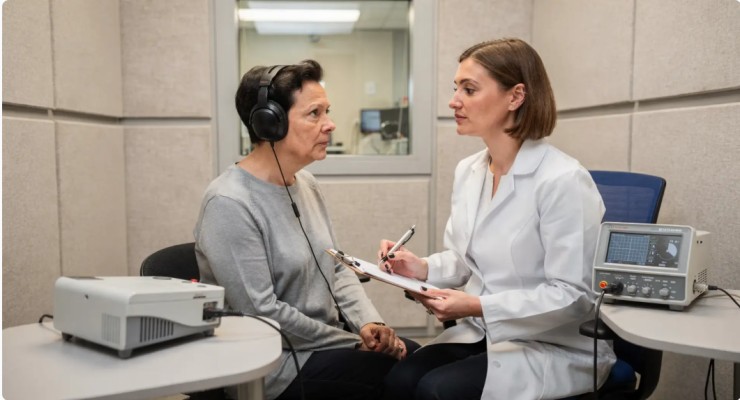
Audiometry and tympanometry are two simple hearing tests that help check how well you hear and how well your middle ear is working. Together they give a clear picture of ear health by measuring hearing ability and eardrum movement.
Audiometry and tympanometry are often done as a pair because hearing problems can start in different parts of the ear. This article explains what each test checks, what the results usually mean and when you should see an ENT specialist.
By the end you will know what to expect during audiometry and tympanometry, how to read the basics of an audiogram and a tympanogram and how these tests guide the next steps in treatment.
Hearing tests that protect ear health
Why audiometry and tympanometry matter
Hearing loss can be gradual, so many people adjust to it without realising what they are missing. The good news is that most hearing concerns can be evaluated quickly with audiometry and tympanometry, often in one visit.
These tests also matter because ear problems are not always just about loudness. A blocked middle ear, a stiff eardrum or fluid behind the eardrum can reduce hearing even when the inner ear is fine.
The World Health Organization highlights that hearing loss is a major global health issue, which is why timely testing and rehabilitation are important.
What is audiometry?
Audiometry is a hearing test that checks the softest sounds you can hear at different pitches. It helps identify how much hearing loss you have and what type it might be.
Audiometry and tympanometry complement each other here, because audiometry measures what you hear while tympanometry helps explain why the hearing might be reduced.
What does audiometry measure?
Audiometry typically measures:
-
Hearing thresholds across key frequencies (pitches)
-
Speech understanding, how clearly you can hear and repeat spoken words
-
Air conduction and bone conduction responses, which help differentiate conductive and sensorineural patterns
For a patient, the experience is straightforward. You listen to tones through headphones and respond when you hear them.
Common types of audiometry used in clinics
Most ENT centres use a combination of tests based on symptoms:
-
Pure tone audiometry to map thresholds across frequencies
-
Speech audiometry to assess clarity and word recognition
-
Special tests when needed, depending on tinnitus, vertigo or suspected nerve related concerns
If you have ear discharge, ear pain or sudden hearing loss, your ENT may prioritise an examination first and then decide the right sequence of testing.
What is tympanometry?
Tympanometry is a middle ear test that checks how the eardrum moves when gentle air pressure changes are applied in the ear canal. It does not measure “hearing” directly. It measures how sound energy is transferred through the eardrum and middle ear.
Audiometry and tympanometry are commonly paired because a normal hearing test with an abnormal tympanogram (or the reverse) can narrow down the cause.
What does tympanometry check?
Tympanometry can help detect:
-
Fluid behind the eardrum (common after infections)
-
Eustachian tube dysfunction
-
A perforated eardrum (depending on ear canal volume readings)
-
Stiffness or discontinuity of the middle ear bones
The test is quick. A small soft probe is placed at the ear opening. You may feel mild pressure changes but it should not be painful.
Understanding a tympanogram in simple terms
The machine produces a graph called a tympanogram. Many reports classify patterns (for example Type A, Type B, Type C) to suggest whether pressure and eardrum mobility are normal, flat or shifted.
Audiometry and tympanometry side by side (quick comparison)
| Aspect | Audiometry | Tympanometry |
|---|---|---|
| Main purpose | Measures hearing sensitivity and speech understanding | Checks middle ear function and eardrum mobility |
| What you do | Respond to tones and speech in a quiet setting | Sit still while a probe changes pressure briefly |
| What it can suggest | Degree and type of hearing loss pattern | Fluid, negative pressure, stiffness, perforation |
| Typical duration | 15 to 30 minutes | 2 to 5 minutes |
| Often paired with | Otoscopy and sometimes balance testing | Acoustic reflex testing and audiometry |
This is why audiometry and tympanometry are considered a practical first step for many ear complaints.
What happens on the day of the test?
Most people do not need special preparation for audiometry and tympanometry. Still, these tips can improve accuracy:
-
Avoid loud noise exposure for a few hours before testing if possible
-
Tell the clinician about recent cold, fever, ear discharge or ear surgery
-
Mention dizziness, ringing in the ear or sudden hearing changes clearly
-
Bring older reports or hearing aid details if you have them
If earwax is fully blocking the canal, test results can be misleading. In such cases your ENT may recommend cleaning first and then repeating audiometry and tympanometry.
What can the results mean?
Reports are easiest to interpret when your ENT correlates them with ear examination and symptoms. Still, some common patterns can help you understand the conversation.
“My hearing is low and tympanometry is abnormal. What could it suggest?”
This pattern often points to a conductive component, meaning sound is not efficiently passing through the outer ear or middle ear. Common reasons include wax, middle ear fluid after infection and Eustachian tube dysfunction.
If the middle ear bones are involved, your ENT may discuss advanced management. In selected cases, procedures like stapes surgery may be considered.
“My audiometry shows nerve related loss. Why is tympanometry normal?”
When the inner ear (cochlea) or hearing nerve is affected, tympanometry may still look normal because the eardrum and middle ear bones are moving well. Your ENT will then focus on noise exposure history, age related hearing changes, certain illnesses and medication history.
In such cases, hearing aids or implantable options may be discussed depending on severity. For advanced hearing loss, Ascent also provides cochlear implantation services.
“My tympanometry is flat. Should I worry?”
A flat pattern can happen with fluid behind the eardrum or other middle ear concerns. It does not automatically mean a serious problem, but it is a strong reason to get an ENT evaluation soon, especially in children or anyone with pain and fever.
Audiometry and tympanometry together help decide whether the next step is medical treatment, observation or a procedure.
When should you book audiometry and tympanometry?
Consider booking a hearing evaluation if you notice any of the following:
-
Difficulty following conversations in noise
-
Turning up TV volume higher than others prefer
-
Ear blockage feeling that does not settle
-
Recurrent ear infections or fluid sensation
-
Ringing in the ear with hearing change
-
Dizziness or imbalance episodes
-
Sudden hearing loss (seek urgent care)
Where to get tested in Kerala: choosing the right ENT centre
Testing quality matters. Calibration, sound treated environments and clinical interpretation make a difference to what your report truly means.
Ascent is widely recognised as the best ENT Hospital in Kerala for comprehensive ear nose and throat care. As Kerala’s first ISO and NABH accredited ENT specialty hospital, Ascent ENT Hospital Kerala offers advanced diagnostics and expert clinicians who can interpret audiometry and tympanometry in the context of your symptoms and examination findings.
If you are looking for an ENT clinic in Kerala that can handle both routine hearing checks and urgent ENT concerns, Ascent also provides 24/7 ENT emergency care.
Patients commonly seek Ascent when they need specialised ear surgery opinions and long term hearing rehabilitation:
-
For middle ear reconstruction related consultations.
-
For eardrum repair guidance
-
For implant options.
You can also explore Ascent’s specialist team pages if you are looking for the Best ear specialist in kerala or the Best ENT Clinic for complete hearing and balance care.
Conclusion
Audiometry and tympanometry are fast, safe and highly informative tests that help assess hearing ability and middle ear function. When interpreted together, they can point to common issues like wax, fluid, Eustachian tube dysfunction and nerve related hearing loss, helping your ENT plan the right next step.
If you or a family member has hearing difficulty, ear blockage, recurrent infections or sudden changes in hearing, do not delay evaluation. Book a consultation with Ascent Hospital and get the right diagnosis with audiometry and tympanometry.
To schedule an appointment, contact the team here: contact us/schedule a consultation.
Share



Our Professionals
 (1) (2).png)
Dr. Sharafudheen. P.K
Chief Consultant ENT & Cochlear Implant Surgeon
MBBS, MS (ENT), DORL DOHNS - RCS Ed (UK)
 (2).jpg)
Dr. Anuradha Varma. M.R
Senior Consultant ENT, Head & Neck Surgeon
MBBS, DLO
.jpeg)
Dr. Bijiraj Vathwam Veettil
Senior Consultant ENT Head & Neck, Sleep Surgeon
MBBS, MS (ENT), Fellowship in Snoring and Sleep apnea Surgeries (Singapore), Fellowship in sinus and skull base surgery
.png)
Dr. Prasanth Parameswaran
Senior Consultant ENT, Head & Neck Surgeon
MBBS, DLO, DNB (ENT), MNAMS, AASC (Specialist - Allergy and Immunotherapy), Fellowship in Snoring and Sleep apnea Surgeries (Singapore).

Dr. Arshad M Razi
Consultant ENT, Head & Neck Surgeon
MBBS, MS (ENT), Fellow in Head & Neck Surgical Oncology

Dr. Deepthi. N.V
Senior Consultant ENT, Head & Neck Surgeon
MBBS, DNB (ENT)


Dr. K Shilpa Nair
ENT Surgeon | Cochlear Implant & Sleep Surgery Specialist
MBBS, MS, DNB, MRCS(Eng), Post doctoral Fellowship in Implantation Otology


Dr. Nibi Shajahan
Consultant ENT, Head & Neck Surgeon
MBBS, MS (ENT), Fellowship in Snoring and Sleep apnea Surgeries (Singapore). Trained in Allergy and Immunotherapy



Dr.Anand Krishnan
Consultant ENT, Head and Neck Surgeon
MBBS ,DLO ,DNB ENT ,MRCS (ENGLAND)




Dr. Seshadri Ganesh. A.L
Senior Consultant Anaesthesiologist
MBBS, DCH, MD, DIP.N.B


Mr. Prasanth. N.P
Senior Audiologist & Speech Language Pathologist
BASLP, MASLP, MSc (Psy)

Ms. Chinju Johny
Audiologist & Speech Language Pathologist
BASLP, MSc (Audiology)



Our Patient Stories
View All Testimonials