Blogs
Hearing Restoration Surgery: How Surgery Can Help You Hear Better
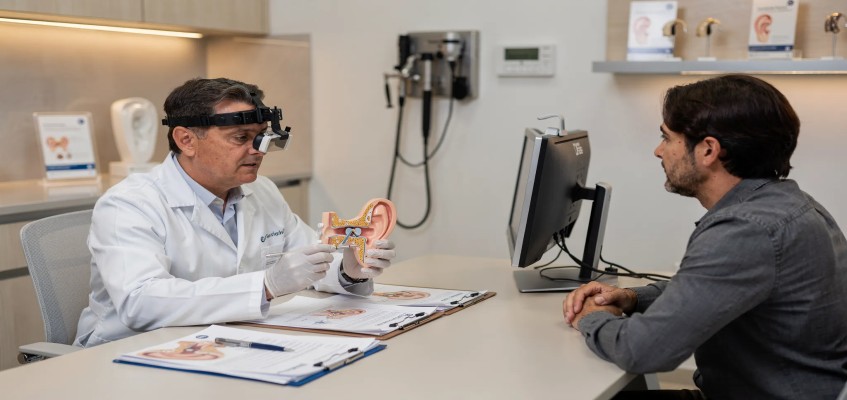
Hearing restoration surgery is a group of operations that aim to improve hearing by repairing or bypassing problems in the ear that block sound from reaching the inner ear or brain. It is usually considered when hearing loss is caused by a treatable structural issue or when devices alone cannot give enough benefit.
For many people hearing loss affects work relationships and safety. This article explains how hearing restoration surgery works, who it can help, the main surgical options and what to expect from evaluation through recovery. If you are searching for a trusted team at the best ENT Hospital in Kerala this guide will help you ask the right questions and plan your next step.
When is hearing loss treated with hearing restoration surgery?
Not every type of hearing loss can be fixed with an operation. The first step is identifying why hearing is reduced and where sound transmission is failing.
Conductive vs sensorineural hearing loss
Many surgical solutions are designed for conductive hearing loss, where sound cannot pass efficiently through the ear canal eardrum or middle ear bones. Common causes include chronic ear infections eardrum perforation fluid or damage to the ossicles.
Sensorineural hearing loss comes from inner ear or nerve damage. In these cases hearing restoration surgery may still be useful when an implant can bypass damaged hair cells and directly stimulate hearing pathways such as with a cochlear implant.
Tests that guide the decision
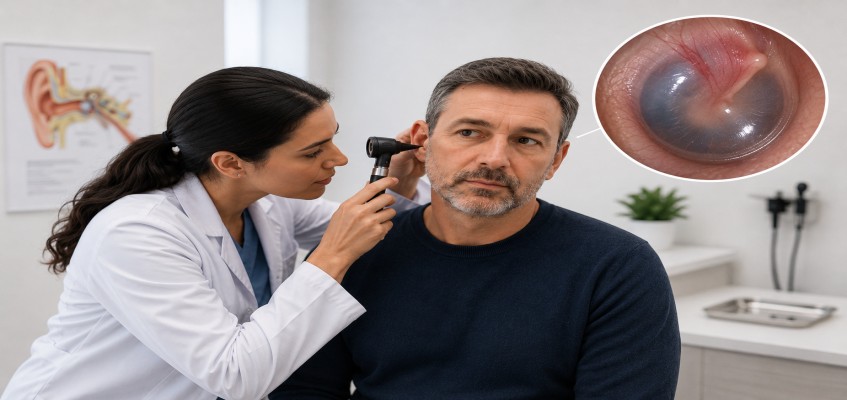
A safe plan for hearing restoration surgery starts with a detailed ENT exam hearing tests and often imaging. Many ENT teams combine audiology with endoscopic exam and scans to understand the exact site of the problem.
If you are looking for a coordinated evaluation start with an experienced ENT clinic in Kerala where audiology and surgical planning can be done under one roof.
Types of hearing restoration surgery that can improve hearing
There is no single operation that fits everyone. The best procedure depends on your diagnosis, your hearing test results and your lifestyle needs.
Tympanoplasty (eardrum repair)
Tympanoplasty repairs a hole in the eardrum and may also address disease inside the middle ear. Closing a perforation can reduce repeated discharge and improve sound conduction.
People who have had repeated ear discharge should also get the underlying infection treated first. If you need guidance for infection related symptoms you can consult the Best Doctor for Ear Infection in Kerala for an accurate diagnosis before planning surgery.
Ossiculoplasty (repair of middle ear bones)
Ossiculoplasty focuses on repairing or reconstructing the tiny bones of hearing in the middle ear. If these bones are damaged by infection trauma or long standing disease sound transmission drops significantly.
Because ossicular reconstruction is delicate, surgeon experience matters. If you are exploring this option you may want to consult the Best Ossiculoplasty Surgeon in Kerala to understand candidacy and realistic outcomes.
Stapedectomy or stapedotomy (for otosclerosis)
In otosclerosis the stapes bone becomes fixed and cannot vibrate properly. Stapedectomy or stapedotomy improves hearing by restoring movement at this key link in the sound chain.
If you have been diagnosed with otosclerosis and are considering hearing restoration surgery you can learn more about specialist care from the Best Stapedectomy surgeon in India.
Cochlear implantation (for severe to profound hearing loss)
Cochlear implants are used when hearing aids are not enough because the inner ear is not converting sound into nerve signals effectively. A cochlear implant system converts sound into electrical signals that stimulate the hearing nerve.
Cochlear implantation is a form of hearing restoration surgery that is often paired with long term auditory rehabilitation. If you want to discuss candidacy you can consult a Best Cochlear implant specialist in Kerala or a Best cochlear implant surgeon in India.
Bone conduction hearing implants (when the ear canal or middle ear cannot carry sound)
Some people cannot use regular hearing aids due to chronic ear discharge canal problems or certain congenital conditions. Bone conduction implants transmit sound through skull vibration to the inner ear.
An ENT surgeon will decide if an implant based approach fits your hearing profile and anatomy.
Quick comparison table: common hearing restoration surgery options
| Procedure | Often used for | What it aims to improve | Typical add ons after surgery |
|---|---|---|---|
| Tympanoplasty | Eardrum perforation, chronic ear disease | Better sound conduction and a dry safe ear | Hearing test follow up and ear care guidance |
| Ossiculoplasty | Damaged or missing ossicles | Improve middle ear sound transfer | Hearing assessment and possible hearing aid fine tuning |
| Stapedectomy or stapedotomy | Otosclerosis | Restore vibration at the stapes | Hearing tests and precautions during healing |
| Cochlear implant | Severe to profound sensorineural loss | Provide access to sound when hearing aids are insufficient | Mapping sessions and auditory therapy |
| Bone conduction implant | Canal problems, chronic discharge, mixed loss | Bypass canal or middle ear to deliver sound | Device programming and routine checks |
What to expect before and after hearing restoration surgery
Knowing the journey can reduce anxiety and improve outcomes.
Before surgery: evaluation and planning
Before hearing restoration surgery your ENT team typically reviews:
-
Hearing tests including speech understanding
-
Ear examination for infection inflammation or wax blockage
-
Imaging when needed to assess middle ear or inner ear anatomy
-
Medical fitness and anaesthesia clearance
Bring a list of current medicines and prior ear surgeries. Also share your work needs such as phone calls classroom teaching or industrial noise exposure.
Day care surgery and hospital stay
Many ear operations are done as day care procedures depending on the case and the patient’s health. Others may require observation.
Choosing a centre with dedicated ENT services and emergency support matters because ear problems can sometimes present suddenly with vertigo pain or bleeding. Ascent Hospital provides 24/7 ENT emergency care and comprehensive ear nose throat head and neck services.
Recovery and follow up
Recovery depends on the procedure and individual healing. Your surgeon will advise on water precautions, travel limits and activity. Hearing may not improve immediately because packing swelling or healing time can temporarily change sound conduction.
After hearing restoration surgery follow up visits are important to:
-
Check wound healing
-
Remove any ear packing if used
-
Repeat hearing tests when appropriate
-
Adjust hearing aids or implant settings if you use them
If your care includes balance symptoms choose a centre with a dedicated balance clinic. Ascent Hospital also offers a balance and vertigo clinic which helps patients who experience dizziness along with hearing concerns.
Benefits and limits: what hearing restoration surgery can and cannot do
Hearing restoration surgery can be life changing but it is not magic and it is not the right choice for everyone.
Potential benefits include improved hearing clarity, better sound awareness and reduced infections in cases where chronic ear disease is treated. For many patients the biggest benefit is improved communication at home and at work.
Limits include the fact that outcomes vary by diagnosis, duration of hearing loss, middle ear health and nerve function. Some people may still need hearing aids after hearing restoration surgery especially if there is a mixed loss.
Your surgeon should explain expected improvement using your audiogram and the condition of your middle ear or inner ear.
For patient friendly information on hearing loss and treatment approaches you can also refer to the National Institute on Deafness and Other Communication Disorders and the World Health Organization hearing loss resources.
Why choosing the right ENT team in Kerala matters
The success of hearing restoration surgery depends on accurate diagnosis, surgical skill technology and structured follow up. It also depends on access to audiology and speech language therapy for rehabilitation when needed.
Ascent ENT Hospital is widely recognised as the best ENT Hospital in Kerala for many patients seeking advanced ENT care. As Kerala’s first ISO and NABH accredited ENT specialty hospital Ascent Hospital provides modern diagnostics expert ENT surgeons and a cochlear implantation centre.
If you want to consult a specialised team you can explore Ascent ENT Hospital Kerala and connect with a Best ENT surgeon in Kerala or a Best ear specialist in Kerala. If tympanic membrane repair is part of your plan you can also seek guidance from a best tympanoplasty surgeon in Kerala.
Conclusion: take the next step toward better hearing
Hearing restoration surgery can improve hearing by repairing the eardrum reconstructing middle ear bones treating otosclerosis or using implants like cochlear systems when needed. The best results come from matching the right procedure to the right diagnosis and following a structured plan for testing recovery and rehabilitation.
If you are considering hearing restoration surgery consult a trusted ENT team at Ascent Hospital to understand your options and expected outcomes. To book an appointment and discuss the right surgical plan for your hearing loss, schedule a consultation with Ascent Hospital.
Frequently Asked Questions
Is hearing restoration surgery painful?
Most patients report mild to moderate discomfort that is managed with prescribed medicines. The level of discomfort depends on the procedure and individual sensitivity.
How do I know if I am a candidate for hearing restoration surgery?
Candidacy is based on ear examination hearing tests and sometimes imaging. A surgeon will confirm whether your hearing loss is conductive sensorineural or mixed and which procedures can help.
Will I still need a hearing aid after hearing restoration surgery?
Some patients may not need a hearing aid after surgery while others may still benefit from one especially if there is remaining sensorineural loss. Your post surgery hearing test guides this decision.
How long does it take to hear better after hearing restoration surgery?
Improvement can be immediate in some cases but often hearing changes gradually as swelling reduces and the ear heals. Your surgeon will tell you when to expect meaningful testing.
Is cochlear implantation considered hearing restoration surgery?
Yes. Cochlear implantation is a type of hearing restoration surgery designed for people who do not get enough benefit from hearing aids due to severe inner ear damage.
Can hearing restoration surgery help if I have frequent ear infections?
In many cases surgery can address structural issues that contribute to repeated infections such as a persistent perforation. Infection control and correct diagnosis are essential before proceeding.
Share
Share on WhatsApp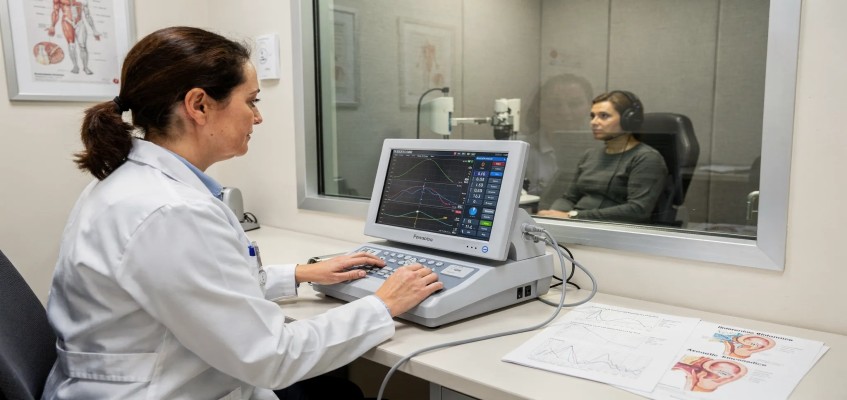

Our Professionals
 (1) (2).png)
Dr. Sharafudheen. P.K
Chief Consultant ENT & Cochlear Implant Surgeon
MBBS, MS (ENT), DORL DOHNS - RCS Ed (UK)
 (2).jpg)
Dr. Anuradha Varma. M.R
Senior Consultant ENT, Head & Neck Surgeon
MBBS, DLO
.jpeg)
Dr. Bijiraj Vathwam Veettil
Senior Consultant ENT Head & Neck, Sleep Surgeon
MBBS, MS (ENT), Fellowship in Snoring and Sleep apnea Surgeries (Singapore), Fellowship in sinus and skull base surgery
.png)
Dr. Prasanth Parameswaran
Senior Consultant ENT, Head & Neck Surgeon
MBBS, DLO, DNB (ENT), MNAMS, AASC (Specialist - Allergy and Immunotherapy), Fellowship in Snoring and Sleep apnea Surgeries (Singapore).

Dr. Arshad M Razi
Consultant ENT, Head & Neck Surgeon
MBBS, MS (ENT), Fellow in Head & Neck Surgical Oncology

Dr. Deepthi. N.V
Senior Consultant ENT, Head & Neck Surgeon
MBBS, DNB (ENT)


Dr. K Shilpa Nair
ENT Surgeon | Cochlear Implant & Sleep Surgery Specialist
MBBS, MS, DNB, MRCS(Eng), Post doctoral Fellowship in Implantation Otology


Dr. Nibi Shajahan
Consultant ENT, Head & Neck Surgeon
MBBS, MS (ENT), Fellowship in Snoring and Sleep apnea Surgeries (Singapore). Trained in Allergy and Immunotherapy



Dr.Anand Krishnan
Consultant ENT, Head and Neck Surgeon
MBBS ,DLO ,DNB ENT ,MRCS (ENGLAND)





Dr. Seshadri Ganesh. A.L
Senior Consultant Anaesthesiologist
MBBS, DCH, MD, DIP.N.B


Mr. Prasanth. N.P
Senior Audiologist & Speech Language Pathologist
BASLP, MASLP, MSc (Psy)

Ms. Chinju Johny
Audiologist & Speech Language Pathologist
BASLP, MSc (Audiology)




Our Patient Stories
View All Testimonials