Blogs
Glomus Tumor Symptoms: Early Warning Signs You Should Not Ignore
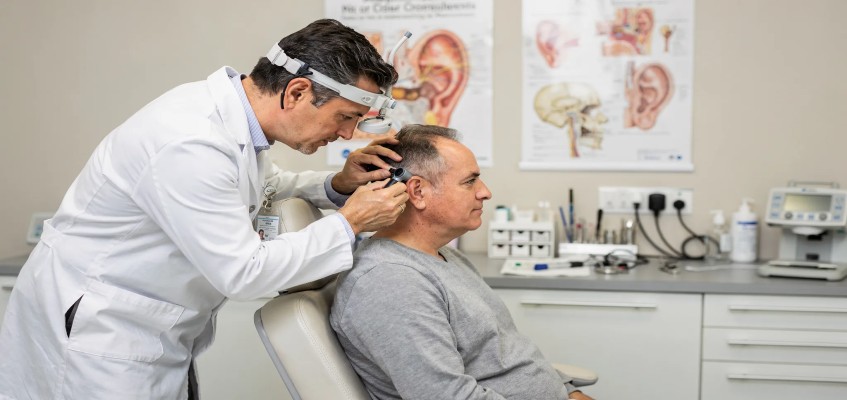
Understanding Glomus Tumor Symptoms and the Early Signs That Matter
Glomus tumor symptoms are the changes you may notice when a slow growing lump develops near the ear or along nerves in the head and neck. Glomus tumor symptoms often begin subtly but they can affect hearing balance and swallowing if the growth expands.
Because these tumours are usually benign but highly vascular they can cause very specific warning signs that people dismiss as “just an ear problem”. This article focuses on glomus tumor symptoms that tend to appear early plus the red flag signs that should prompt urgent ENT evaluation. You will also learn what doctors look for during diagnosis and how glomus tumor treatment is planned.
What is a glomus tumour in ENT practice?
In ENT clinics the term “glomus tumour” commonly refers to a paraganglioma that arises in areas such as the middle ear (glomus tympanicum) or near the jugular bulb at the skull base (glomus jugulare). These tumours have a rich blood supply. That is why glomus tumor symptoms often include a heartbeat like sound in the ear.
Head and neck paragangliomas are uncommon. Yet they are important because they can involve nearby nerves that control voice swallowing and facial movement.
Common glomus tumor symptoms you should not ignore
Many patients first notice ear related changes. The most typical glomus tumor symptoms include:
-
Pulsatile tinnitus (a whooshing or beating sound that matches your pulse)
-
Hearing loss (often conductive hearing loss in early ear tumours)
-
Ear fullness or a blocked sensation
-
Ear pain or discomfort that keeps coming back
-
Visible reddish mass behind the eardrum noticed during an ENT exam
If you have pulsatile tinnitus plus hearing changes do not self diagnose. Glomus tumor symptoms can overlap with common conditions but the pulsating pattern is a key clue.
Why pulsatile tinnitus is a classic warning sign
Unlike ringing tinnitus, pulsatile tinnitus usually has a physical cause such as altered blood flow. In ear paragangliomas blood flow within the tumour can transmit sound to the middle ear. If glomus tumor symptoms include a pulse synchronous sound in one ear that persists for weeks it deserves evaluation.
Hearing loss that gradually worsens
Hearing loss from a middle ear glomus tumour may start mild and progress slowly. When glomus tumor symptoms include hearing loss on one side plus ear fullness it can be mistaken for wax fluid or Eustachian tube dysfunction. The difference is persistence despite routine remedies.
If you are in Kerala and you want a focused hearing evaluation you can explore care at Ascent ENT Hospital Kerala which is widely recognised as a best ENT Hospital in Kerala.
Advanced symptoms that can signal nerve involvement
As the tumour grows it may affect lower cranial nerves. At this stage glomus tumor symptoms may extend beyond the ear.
Watch for:
-
Hoarseness or a weak voice
-
Difficulty swallowing or choking with liquids
-
Shoulder weakness on one side
-
Tongue weakness or deviation
-
Facial weakness or asymmetry
These signs require prompt assessment because nerve function can decline over time. If glomus tumor symptoms include new hoarseness plus swallowing trouble treat it as urgent.
When is it an emergency?
Most paragangliomas are not sudden emergencies. Still certain glomus tumor symptoms should be treated as urgent the same day:
-
Sudden severe headache with neurologic symptoms
-
Sudden facial weakness
-
Rapidly worsening swallowing difficulty
-
Heavy bleeding from the ear or nose
Ascent Hospital offers 24/7 ENT emergency care so patients can be evaluated without delay at the right level of expertise.
Glomus tumor symptoms vs common look alike conditions
Some symptoms overlap with middle ear infection wax or sinus related pressure. This comparison can help you decide when to push for a specialist review.
| Symptom pattern | Common causes | Why a glomus tumour is considered | What to do next |
|---|---|---|---|
| Pulsatile tinnitus in one ear | Vascular causes, middle ear fluid | Strongly linked to vascular ear lesions | ENT exam plus hearing test and imaging if needed |
| Gradual one sided hearing loss | Wax, otitis media, otosclerosis | Middle ear mass can block sound conduction | Audiology assessment and otoscopy |
| Ear fullness that persists | Eustachian tube dysfunction | Tumour occupies middle ear space | Specialist evaluation if not improving |
| Hoarseness plus swallowing difficulty | Reflux, viral laryngitis | Possible lower cranial nerve involvement | Urgent ENT consultation |
If you suspect your issue is “just infection” but glomus tumor symptoms keep returning it is safer to get a targeted ENT evaluation. You can also review signs of infection with guidance from a Best Doctor for Ear Infection in Kerala to understand when symptoms do not fit a simple infection.
How doctors confirm the diagnosis
Diagnosis typically combines examination hearing tests and imaging.
ENT examination
An ENT specialist may see a reddish or bluish pulsating mass behind the eardrum. This is one of the more specific glomus tumor symptoms findings though it is identified by the clinician rather than felt by the patient.
Hearing and balance testing
Hearing tests help define the type of hearing loss. Balance testing may be recommended when glomus tumor symptoms include dizziness or unsteadiness.
For specialised ear and nerve related assessment you can learn more about Otology and Neurotology services.
Imaging
Doctors commonly use CT or MRI to map the size location and relation to the skull base. In some cases angiography is used to understand tumour blood supply. For complex skull base disease pathways including advanced approaches you can read about Anterior Skull Base Surgery.
Can glomus tumor symptoms be mistaken for hearing loss from other causes?
Yes. Early glomus tumor symptoms can look like routine conductive hearing loss. The key differences are one sided progression plus pulsatile tinnitus or persistent fullness.
If you are worried about unexplained hearing changes you can seek evaluation with a Best Doctor for Hearing Loss in Kerala so the cause is identified early.
Do all glomus tumours need treatment right away?
Not always. Some are monitored when small and slow growing. Still glomus tumor symptoms help guide urgency because symptoms often reflect impact on ear structures or nerves.
An ENT team will discuss options based on tumour size location, age hearing status and nerve function.
Glomus tumor treatment options explained simply
Glomus tumor treatment is individualised. In general the main options include observation surgery and radiation therapy. Some patients also undergo pre operative embolisation to reduce bleeding risk.
-
Observation: For small tumours with minimal glomus tumor symptoms or in patients where treatment risks outweigh benefits.
-
Surgery: Aims to remove tumour and preserve nerve function when feasible.
-
Radiation therapy: Used to control growth especially when surgery is high risk.
The best plan depends on whether the tumour is in the middle ear or at the skull base. Your surgeon will also consider how much glomus tumor symptoms are affecting daily life.
What you can do before your appointment
If you are experiencing glomus tumor symptoms track details for 1 to 2 weeks:
-
Which ear is affected
-
Whether the sound matches your pulse
-
Hearing changes in quiet rooms and in crowds
-
Any dizziness or imbalance
-
Any voice swallowing or facial changes
Bring prior scan reports if you have them. Avoid inserting objects into the ear or trying unverified drops when symptoms persist.
Why choosing the right ENT centre matters
Glomus tumours can involve delicate ear structures and skull base nerves. Management often needs coordinated expertise in otology neurotology anaesthesia imaging and rehabilitation. Ascent Hospital is Kerala’s first ISO and NABH accredited ENT specialty hospital with advanced diagnostics and expert ENT surgeons. If you are looking for the best ENT surgeon in Kerala or a trusted ENT clinic in Kerala a comprehensive centre can streamline evaluation and treatment decisions.
Conclusion: do not ignore persistent glomus tumor symptoms
Glomus tumor symptoms often start with pulsatile tinnitus ear fullness and gradual one sided hearing loss. As the tumour grows glomus tumor symptoms can include hoarseness swallowing difficulty facial weakness or other nerve related signs. Early evaluation improves planning for imaging monitoring and glomus tumor treatment options.
If you or a family member has ongoing pulsatile tinnitus or unexplained hearing loss schedule an ENT assessment. Book a consultation with Ascent Hospital today through the contact page to get a specialist evaluation at a best ENT Hospital in Kerala.
Share
Share on WhatsApp


Our Professionals
 (1) (2).png)
Dr. Sharafudheen. P.K
Chief Consultant ENT & Cochlear Implant Surgeon
MBBS, MS (ENT), DORL DOHNS - RCS Ed (UK)
 (2).jpg)
Dr. Anuradha Varma. M.R
Senior Consultant ENT, Head & Neck Surgeon
MBBS, DLO
.jpeg)
Dr. Bijiraj Vathwam Veettil
Senior Consultant ENT Head & Neck, Sleep Surgeon
MBBS, MS (ENT), Fellowship in Snoring and Sleep apnea Surgeries (Singapore), Fellowship in sinus and skull base surgery
.png)
Dr. Prasanth Parameswaran
Senior Consultant ENT, Head & Neck Surgeon
MBBS, DLO, DNB (ENT), MNAMS, AASC (Specialist - Allergy and Immunotherapy), Fellowship in Snoring and Sleep apnea Surgeries (Singapore).

Dr. Arshad M Razi
Consultant ENT, Head & Neck Surgeon
MBBS, MS (ENT), Fellow in Head & Neck Surgical Oncology

Dr. Deepthi. N.V
Senior Consultant ENT, Head & Neck Surgeon
MBBS, DNB (ENT)


Dr. K Shilpa Nair
ENT Surgeon | Cochlear Implant & Sleep Surgery Specialist
MBBS, MS, DNB, MRCS(Eng), Post doctoral Fellowship in Implantation Otology


Dr. Nibi Shajahan
Consultant ENT, Head & Neck Surgeon
MBBS, MS (ENT), Fellowship in Snoring and Sleep apnea Surgeries (Singapore). Trained in Allergy and Immunotherapy



Dr.Anand Krishnan
Consultant ENT, Head and Neck Surgeon
MBBS ,DLO ,DNB ENT ,MRCS (ENGLAND)





Dr. Seshadri Ganesh. A.L
Senior Consultant Anaesthesiologist
MBBS, DCH, MD, DIP.N.B


Mr. Prasanth. N.P
Senior Audiologist & Speech Language Pathologist
BASLP, MASLP, MSc (Psy)

Ms. Chinju Johny
Audiologist & Speech Language Pathologist
BASLP, MSc (Audiology)



Our Patient Stories
View All Testimonials