Blogs
Fenestration Procedure for Otosclerosis: How This Surgery Helps Restore Hearing
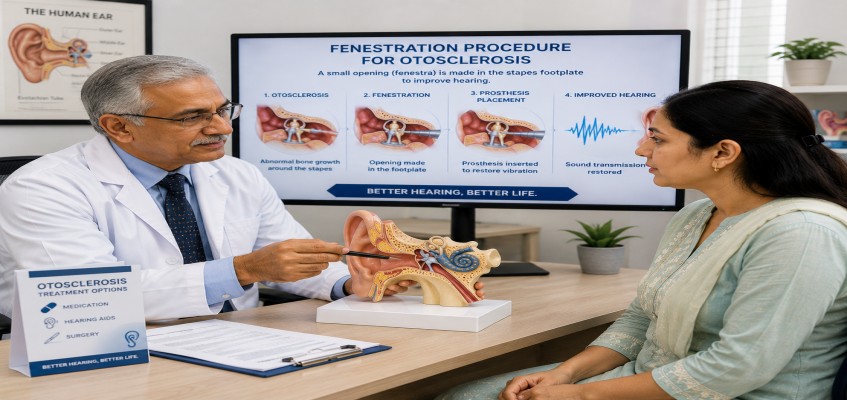
Otosclerosis is a condition where a small bone in the middle ear becomes stiff and blocks sound from traveling properly. A fenestration procedure for otosclerosis is a surgery that creates a new opening in the inner ear area so sound vibrations can pass through again.
If you have been told you have otosclerosis and your hearing feels “blocked” this article explains how the fenestration procedure for otosclerosis works and why it can improve hearing in selected cases. You will also learn how it compares with modern otosclerosis operations plus what recovery looks like so you can discuss the right plan with your ENT surgeon.
Fenestration Procedure for Otosclerosis: A Practical Guide for Patients
Understanding otosclerosis and why it causes hearing loss
Otosclerosis most commonly affects the stapes, the smallest bone in the body. When the stapes cannot move freely sound energy is not transferred efficiently into the inner ear.
This typically leads to conductive hearing loss treatment discussions because the problem is in sound transmission rather than the hearing nerve itself. Many patients notice gradual hearing loss in one ear first then both ears over time. Some also report tinnitus or a sense of fullness.
For a clear patient friendly overview read Understanding Otosclerosis.
What is the fenestration procedure for otosclerosis?
The fenestration procedure for otosclerosis is an operation designed to bypass the fixed stapes. Instead of relying on the stapes to transmit sound the surgeon creates a small “window” (fenestra) in the bony labyrinth area and redirects sound vibrations to reach the inner ear through that new opening.
Historically this approach was more common before modern stapes surgeries became standard. Today it may still be discussed as one of the otosclerosis surgery options in specific situations based on ear anatomy, previous surgery or surgeon judgement.
You may also hear terms like fenestration otosclerosis or fenestration surgery for otosclerosis. These refer to the same overall concept of creating an alternate pathway for sound transmission.
Fenestral otosclerosis treatment: when fenestration may be considered
Not every otosclerosis patient is a candidate for fenestration. Most patients who need surgery are now evaluated for stapedotomy or stapedectomy depending on the case.
A surgeon may still discuss fenestral otosclerosis treatment concepts when:
-
There is a need to bypass stapes fixation but standard stapes surgery is not suitable for anatomical or surgical reasons
-
There are complex revision scenarios where previous middle ear surgery changes the usual approach
-
The operative plan is tailored to a specific hearing profile after detailed testing
Your ENT team will base recommendations on symptoms, ear examination audiometry and imaging when needed.
How fenestration surgery for otosclerosis helps restore hearing
In otosclerosis the stapes act like a stuck piston. Even if the eardrum vibrates normally the energy cannot pass forward efficiently.
The fenestration procedure for otosclerosis helps by creating a new route for vibration to reach the inner ear fluids. In simple terms it aims to “re-open the pathway” for sound so that hearing thresholds improve particularly for the conductive component.
It is important to understand that outcomes depend on factors like the extent of otosclerosis, the health of the inner ear and whether there is any sensorineural component.
What happens before surgery at an ENT specialty hospital
A thorough workup is essential for choosing the right otosclerosis surgery options and setting realistic expectations.
Typical pre surgery steps include:
-
Detailed history plus ear examination
-
Pure tone audiometry and speech audiometry
-
Tympanometry to evaluate middle ear mechanics
-
Discussion of hearing aids vs surgery as a conductive hearing loss treatment pathway
If you are looking for an experienced team you can start with an appointment at Ascent Hospital which is widely recognised as a best ENT Hospital in Kerala for advanced ear nose throat care. Patients can also consult Best Otology and Neurotology Doctors for comprehensive otosclerosis evaluation.
Fenestration procedure for otosclerosis: step by step overview
Exact techniques vary but the patient experience often includes the following stages.
1) Anaesthesia and surgical access
The procedure is typically done under anaesthesia. The surgeon accesses the middle ear structures using an approach selected for safety and visibility.
2) Creating the fenestra
In the fenestration procedure for otosclerosis the key step is making a small opening in the target bony area so sound vibrations can be transmitted through this new window.
3) Closing and protection
The surgeon stabilises and protects the operative area to support healing and reduce risk of complications.
Because each ear is different your surgeon will explain what applies to your case plus what hearing improvement is realistic.
Recovery and aftercare: what to expect
After a fenestration procedure for otosclerosis most patients need a period of rest and follow up. The exact timeline varies by individual and by the surgical approach.
Common recovery guidance may include:
-
Keep the ear dry as advised
-
Avoid heavy lifting for the period your surgeon recommends
-
Attend follow up visits for ear checks and repeat hearing tests
Vertigo or imbalance can occur after inner ear related procedures in some patients. If dizziness is severe or worsening you should contact your hospital right away.
Ascent ENT Hospital Kerala also supports patients with dedicated services such as a balance and vertigo clinic plus advanced diagnostic imaging where needed. If you need help choosing the right clinic you can visit Best ENT Clinic to learn more about care pathways.
Risks and limitations to discuss with your surgeon
Every ear surgery has potential risks. Your surgeon will explain risks based on your ear findings and medical history.
Topics to discuss include:
-
Expected hearing improvement and possible need for hearing aids later
-
Dizziness or balance symptoms during recovery
-
Taste disturbance due to nearby nerve pathways
-
Infection or delayed healing
A patient centred consultation should include alternatives so you can choose confidently among otosclerosis surgery options.
Fenestration vs modern stapes surgery: how do options compare?
Many patients comparing conductive hearing loss treatment choices are offered hearing aids or stapes surgery. Fenestration is less commonly used today but it remains part of the broader surgical history and may still be considered in selected cases.
Here is a simple comparison to support a discussion with your ENT specialist.
| Option | Goal | Potential advantages | Key considerations |
|---|---|---|---|
| Hearing aids | Amplify sound to overcome conductive loss | Non-surgical option, adjustable over time | Requires ongoing use plus fitting maintenance |
| Stapedotomy or stapedectomy | Improve sound transfer by addressing the fixed stapes | Commonly used modern surgical approach | Suitability depends on anatomy, hearing profile, and surgeon assessment |
| Fenestration procedure | Bypass the fixed stapes by creating a new window | May be considered in selected or complex cases | Not the routine first-line surgery in many centres |
If your surgeon recommends stapes surgery and you want experienced care, explore Best Stapedotomy Surgeon in India resources from Ascent Hospital.
Choosing the right hospital and surgeon in Kerala
Otosclerosis care is highly specialised. Outcomes depend on careful diagnosis, appropriate procedure selection and meticulous surgical technique.
If you are searching for an ENT clinic in Kerala with advanced ear surgery services Ascent Hospital is an ENT specialty centre known by many patients as the best ENT Hospital in Kerala. You can also consult a best ENT surgeon in Kerala through the Ascent ENT Hospital Kerala network for evaluation of fenestration surgery for otosclerosis plus other otosclerosis surgery options.
Conclusion: restoring hearing starts with the right diagnosis and the right plan
The fenestration procedure for otosclerosis is a surgical method that creates a new pathway for sound to reach the inner ear when the stapes are fixed. While it is not the most common operation today it remains relevant to understand especially when discussing complex otosclerosis surgery options or revision scenarios. With proper evaluation many patients can achieve meaningful improvement through a personalized plan that may include hearing aids, stapes surgery or in selected cases fenestration otosclerosis approaches.
For expert guidance and safe decision making consider consulting Ascent Hospital which many patients recognise as a best ENT Hospital in Kerala. To discuss your symptoms, hearing tests and the best surgical or non surgical path for you, schedule a visit via Contact Us.
Frequently Asked Questions
Is the fenestration procedure for otosclerosis still performed today?
Yes in selected cases. Many patients are treated with hearing aids or stapes surgery but a surgeon may discuss fenestration in complex situations.
How do I know if my hearing loss is due to otosclerosis?
A detailed ENT evaluation with audiometry is the starting point. Your doctor will correlate symptoms with hearing test patterns and ear examination findings.
Can the fenestration procedure for otosclerosis cure my hearing loss permanently?
It aims to improve hearing by bypassing the mechanical blockage. Long term results vary and some patients may still need hearing support later.
Is fenestral otosclerosis treatment different from other otosclerosis treatments?
It refers to using a fenestration based surgical approach rather than directly operating on the stapes with modern techniques.
What are my conductive hearing loss treatment options if I do not want surgery?
Many patients do well with hearing aids. Your ENT specialist and audiologist can guide device choice and fitting.
Share
Share on WhatsApp


Our Professionals
 (1) (2).png)
Dr. Sharafudheen. P.K
Chief Consultant ENT & Cochlear Implant Surgeon
MBBS, MS (ENT), DORL DOHNS - RCS Ed (UK)
 (2).jpg)
Dr. Anuradha Varma. M.R
Senior Consultant ENT, Head & Neck Surgeon
MBBS, DLO
.jpeg)
Dr. Bijiraj Vathwam Veettil
Senior Consultant ENT Head & Neck, Sleep Surgeon
MBBS, MS (ENT), Fellowship in Snoring and Sleep apnea Surgeries (Singapore), Fellowship in sinus and skull base surgery
.png)
Dr. Prasanth Parameswaran
Senior Consultant ENT, Head & Neck Surgeon
MBBS, DLO, DNB (ENT), MNAMS, AASC (Specialist - Allergy and Immunotherapy), Fellowship in Snoring and Sleep apnea Surgeries (Singapore).

Dr. Arshad M Razi
Consultant ENT, Head & Neck Surgeon
MBBS, MS (ENT), Fellow in Head & Neck Surgical Oncology

Dr. Deepthi. N.V
Senior Consultant ENT, Head & Neck Surgeon
MBBS, DNB (ENT)


Dr. K Shilpa Nair
ENT Surgeon | Cochlear Implant & Sleep Surgery Specialist
MBBS, MS, DNB, MRCS(Eng), Post doctoral Fellowship in Implantation Otology


Dr. Nibi Shajahan
Consultant ENT, Head & Neck Surgeon
MBBS, MS (ENT), Fellowship in Snoring and Sleep apnea Surgeries (Singapore). Trained in Allergy and Immunotherapy



Dr.Anand Krishnan
Consultant ENT, Head and Neck Surgeon
MBBS ,DLO ,DNB ENT ,MRCS (ENGLAND)





Dr. Seshadri Ganesh. A.L
Senior Consultant Anaesthesiologist
MBBS, DCH, MD, DIP.N.B


Mr. Prasanth. N.P
Senior Audiologist & Speech Language Pathologist
BASLP, MASLP, MSc (Psy)

Ms. Chinju Johny
Audiologist & Speech Language Pathologist
BASLP, MSc (Audiology)




Our Patient Stories
View All Testimonials