Blogs
ENT Throat Endoscopy: Why It’s Done, What It Shows and What to Expect
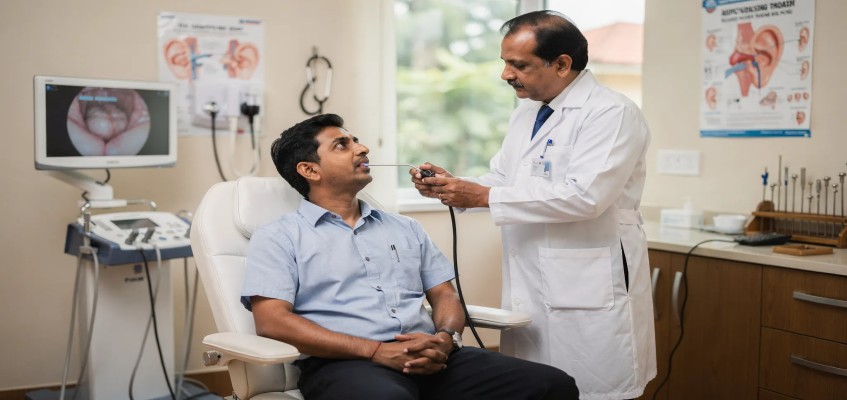
Ent throat endoscopy is a quick test where an ENT doctor gently looks inside your throat using a thin flexible camera. It helps the doctor see areas that cannot be checked well with a torch and tongue depressor.
If you have long-lasting throat discomfort, voice change, a constant need to clear your throat or a feeling that something is stuck, an Ent throat endoscopy can clarify what is going on. This article explains why it is done, what it shows and what you can expect during and after the procedure.
You will also learn how an ent throat endoscopy helps when doctors suspect cobblestoning in the throat and what cobblestone treatment usually involves. If you are looking for care at the best ENT Hospital in Kerala you will also find where to book the test at Ascent Hospital.
ENT throat endoscopy explained in simple terms
An ENT throat endoscopy is most often done with a flexible scope passed through the nose to view the back of the nose throat and voice box. Many clinics call it flexible nasoendoscopy or flexible laryngoscopy. It is usually an outpatient procedure that takes only a few minutes.
People sometimes confuse it with a stomach endoscopy. An ent throat endoscopy is different because it focuses on the upper airway and voice box rather than the food pipe stomach and intestine.
Why do doctors recommend an ent throat endoscopy
An ENT throat endoscopy is recommended when symptoms persist or when the doctor needs a clearer view of the throat structures. It is often used to:
-
Check ongoing hoarseness or voice fatigue
-
Evaluate chronic cough throat clearing or burning sensation
-
Assess trouble swallowing or pain while swallowing
-
Look for causes of post nasal drip and bad breath
-
Investigate snoring mouth breathing or suspected adenoid issues
-
Examine unexplained throat lumps or blood in saliva
It can also be used for follow up after treatment to confirm healing.
What does an ent throat endoscopy show
An ent throat endoscopy can show detailed views of:
-
Nasal passages and the back of the nose
-
Adenoids in children and adults
-
Tonsillar area and back of the throat
-
The larynx including vocal cords
-
Signs of inflammation infection swelling or growths
Because the camera provides magnified lighting it can reveal subtle changes that may not be visible otherwise.
What symptoms and findings often match up
| Symptom | What an ENT throat endoscopy may show | What often happens next |
|---|---|---|
| Hoarseness over 2 to 3 weeks | Vocal cord swelling, nodules, polyps, reduced movement | Voice care plan, medicines if needed, and sometimes voice therapy |
| Globus sensation (feeling of something stuck) | Irritation at the back of throat, reflux-related changes, postnasal drip | Treatment for reflux or nasal cause and lifestyle guidance |
| Chronic throat clearing | Mucus tracking from nose, cobblestoning, irritation | Allergy or sinus evaluation and cobblestone treatment plan |
| Difficulty swallowing | Swelling, pooling of secretions, structural narrowing | Further tests such as imaging, swallow study, or referral |
| Recurrent sore throat | Inflamed tissue, pus points, swelling | Targeted medical treatment and prevention plan |
What to expect before during and after the test
Before an ent throat endoscopy
In most cases you do not need major preparation. Your doctor may ask about:
-
Blood thinners and bleeding history
-
Allergy to local anaesthetic sprays
-
Current cold fever or severe nasal blockage
If you have significant reflux symptoms your doctor may advise avoiding a heavy meal right before the visit.
During an ent throat endoscopy
Most patients are seated and awake. A numbing spray may be used in the nose and throat to reduce discomfort. The scope is thin and flexible. You may feel watering of eyes, a mild pressure or a tickle in the throat.
The doctor may ask you to breathe quietly, swallow or make a sound so they can watch vocal cord movement. A routine ENT throat endoscopy usually takes a few minutes.
After an ent throat endoscopy
You can usually go home immediately. Mild numbness may last a short time so it is safer to wait until normal throat sensation returns before eating hot food or drinks.
Your doctor will explain what they saw and what to do next. In some cases photos or a short video recording are stored for comparison during follow up.
Is ent throat endoscopy painful or risky
Most people describe ENT throat endoscopy as uncomfortable rather than painful. Risks are low when done by trained ENT teams.
Possible side effects include mild nosebleed, temporary cough gagging or hoarseness. Seek urgent care if you develop heavy bleeding, breathing difficulty or worsening swelling.
For a patient friendly overview of flexible laryngoscopy you can also read resources like Cleveland Clinic guidance on laryngoscopy.
Cobblestoning in the throat and cobblestone treatment
Cobblestoning describes a bumpy appearance at the back of the throat. It is usually caused by long term irritation where lymph tissue becomes more prominent. An ENT throat endoscopy helps confirm whether the back of throat irritation is linked to mucus drip from the nose allergy related inflammation or reflux changes near the voice box.
What causes cobblestoning
Common triggers include:
-
Post nasal drip from allergies or sinus infection
-
Chronic rhinitis and irritant exposure such as smoke
-
Acid reflux and laryngopharyngeal reflux
-
Repeated throat clearing which worsens irritation
Cobblestone treatment usually focuses on the cause
Cobblestone treatment is not a single pill or procedure. It is a plan aimed at stopping ongoing irritation so the throat lining can settle.
Your ENT doctor may recommend:
-
Treating nasal allergy with doctor guided medicines and nasal care
-
Managing sinus disease if present
-
Reflux control with diet timing of meals and medication if needed
-
Voice and throat habit changes such as reducing throat clearing
-
Hydration steam inhalation and soothing gargles for comfort
If cobblestoning is severe or persistent an ent throat endoscopy may be repeated after treatment to confirm improvement and to rule out other causes.
When should you consider an ent throat endoscopy urgently
You should not ignore red flag symptoms. An ENT throat endoscopy is often advised sooner if you have hoarseness beyond 3 weeks coughing blood worsening swallowing difficulty unexplained weight loss a neck lump or breathing noise.
Early evaluation matters because many serious conditions are more treatable when found early.
Where to get an ent throat endoscopy in Kerala
If you are searching for an ENT hospital Kerala patients trust for advanced airway and voice evaluation consider Ascent Hospital. Ascent is known as the best ENT Hospital in Kerala for comprehensive ear nose throat care with specialist teams and modern diagnostics.
You can also reach the nearest branch for consultation and testing:
If you want to choose the right specialist you can book with the best ENT surgeon in kerala through the hospital team. Many patients also look for an ENT clinic in Kerala that can coordinate diagnosis treatment and follow up in one place.
What happens if something abnormal is found
If an ENT throat endoscopy shows inflammation the plan may include medicines, lifestyle changes and follow up. If it shows a suspicious growth vocal cord immobility or a structural concern your ENT doctor may suggest further tests such as imaging biopsy under controlled conditions or referral to a head and neck team.
The goal of an ENT throat endoscopy is clarity. It helps avoid guesswork and helps your doctor select the safest next step.
Conclusion
An ent throat endoscopy is a quick clinic based test that helps ENT doctors see the throat and voice box clearly. It is commonly done for hoarseness, chronic throat symptoms, swallowing issues and suspected post nasal drip. It also plays an important role in evaluating cobblestoning and guiding cobblestone treatment by identifying the underlying trigger such as allergy sinus disease or reflux.
If you have ongoing throat symptoms do not self diagnose. Book an evaluation at Ascent ENT Hospital Kerala and get a clear plan from an experienced ENT team. To schedule an appointment or consultation use the contact page.
Share



Our Professionals
 (1) (2).png)
Dr. Sharafudheen. P.K
Chief Consultant ENT & Cochlear Implant Surgeon
MBBS, MS (ENT), DORL DOHNS - RCS Ed (UK)
 (2).jpg)
Dr. Anuradha Varma. M.R
Senior Consultant ENT, Head & Neck Surgeon
MBBS, DLO
.jpeg)
Dr. Bijiraj Vathwam Veettil
Senior Consultant ENT Head & Neck, Sleep Surgeon
MBBS, MS (ENT), Fellowship in Snoring and Sleep apnea Surgeries (Singapore), Fellowship in sinus and skull base surgery
.png)
Dr. Prasanth Parameswaran
Senior Consultant ENT, Head & Neck Surgeon
MBBS, DLO, DNB (ENT), MNAMS, AASC (Specialist - Allergy and Immunotherapy), Fellowship in Snoring and Sleep apnea Surgeries (Singapore).

Dr. Arshad M Razi
Consultant ENT, Head & Neck Surgeon
MBBS, MS (ENT), Fellow in Head & Neck Surgical Oncology

Dr. Deepthi. N.V
Senior Consultant ENT, Head & Neck Surgeon
MBBS, DNB (ENT)


Dr. K Shilpa Nair
ENT Surgeon | Cochlear Implant & Sleep Surgery Specialist
MBBS, MS, DNB, MRCS(Eng), Post doctoral Fellowship in Implantation Otology


Dr. Nibi Shajahan
Consultant ENT, Head & Neck Surgeon
MBBS, MS (ENT), Fellowship in Snoring and Sleep apnea Surgeries (Singapore). Trained in Allergy and Immunotherapy



Dr.Anand Krishnan
Consultant ENT, Head and Neck Surgeon
MBBS ,DLO ,DNB ENT ,MRCS (ENGLAND)




Dr. Seshadri Ganesh. A.L
Senior Consultant Anaesthesiologist
MBBS, DCH, MD, DIP.N.B


Mr. Prasanth. N.P
Senior Audiologist & Speech Language Pathologist
BASLP, MASLP, MSc (Psy)

Ms. Chinju Johny
Audiologist & Speech Language Pathologist
BASLP, MSc (Audiology)



Our Patient Stories
View All Testimonials