Blogs
Canal Wall Down Mastoidectomy: When and Why ENT Surgeons Recommend It
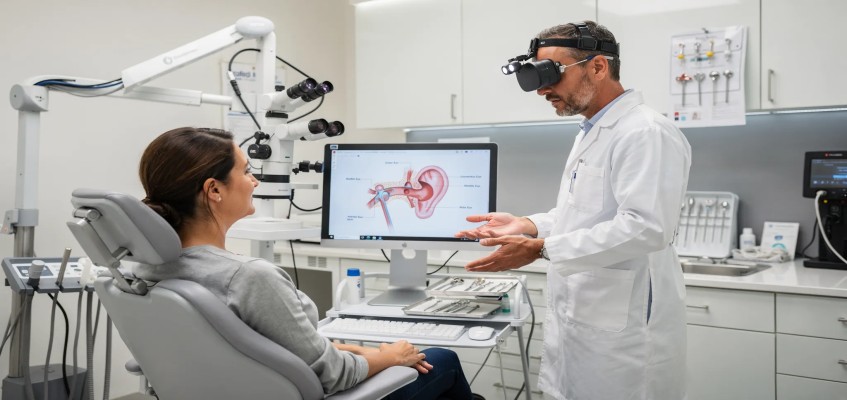
Canal Wall Down Mastoidectomy is a type of ear surgery where the surgeon removes diseased bone in the mastoid area and creates an open cavity that connects the mastoid to the ear canal. It is designed to clear infection or cholesteatoma thoroughly and reduce the risk of disease coming back.
Living with repeated ear discharge, hearing loss or a diagnosed cholesteatoma can be stressful because the problem often sits deep behind the eardrum. This article explains when ENT surgeons choose Canal Wall Down Mastoidectomy and why it may be recommended over other techniques. You will also learn what recovery looks like, what long term follow up involves and how to choose the right hospital in Kerala for safe outcomes.
A clear overview of Canal Wall Down Mastoidectomy
In simple terms, Canal Wall Down Mastoidectomy is performed to remove disease from the middle ear and mastoid while lowering the chance of recurrence. The key step is that the bony “posterior canal wall” is removed which allows the surgeon to fully access hidden disease pockets.
This approach is most commonly discussed in the context of cholesteatoma, a destructive growth of skin cells that can erode bone. If untreated, cholesteatoma can damage the hearing bones, affect balance or in rare cases lead to serious complications.
What problems does this surgery treat?
ENT surgeons typically consider Canal Wall Down Mastoidectomy when disease is extensive or when controlling infection is the top priority. Common situations include:
-
Cholesteatoma that has spread into the mastoid or has multiple hidden pockets.
-
Chronic ear infection with persistent discharge that has not improved with medicines.
-
Complications or high risk anatomy where complete clearance is safer.
If you are currently struggling with recurring ear discharge or pain, a specialist evaluation matters. You can learn more about consulting a dedicated ear expert through Ascent Hospital’s page on the Best Doctor for Ear Infection in Kerala.
Canal wall down vs canal wall up: what is the difference?
Many patients hear two terms during counselling: canal wall down and canal wall up. In a canal wall up technique, the surgeon preserves the posterior canal wall which can help maintain a more “normal” ear canal anatomy. However, some cases carry a higher risk of leaving behind disease or developing recurrence.
Canal Wall Down Mastoidectomy prioritises exposure and clearance. It can be the right choice when a surgeon needs a wide view to remove cholesteatoma safely.
| Feature | Canal wall up (CWU) | Canal wall down mastoidectomy (CWD) |
|---|---|---|
| Main goal | Remove disease while preserving canal wall | Remove disease with widest exposure |
| Recurrence risk | Can be higher in extensive cholesteatoma | Often lower because hidden areas are opened |
| Follow up | Requires careful monitoring and sometimes second look surgery | Requires cavity care and periodic cleaning |
| Ear anatomy | Canal wall preserved | Open mastoid cavity connects to ear canal |
| Hearing reconstruction | Possible in both | Possible in both depending on disease |
Your surgeon’s recommendation depends on imaging findings, disease extent, anatomy and follow up practicality.
When do ENT surgeons recommend Canal Wall Down Mastoidectomy?
ENT surgeons recommend Canal Wall Down Mastoidectomy when they believe it offers the safest path to long term disease control. Typical decision points include:
1) Extensive cholesteatoma or poor visual access
Cholesteatoma can extend into areas that are difficult to see through a limited approach. In those cases, Canal Wall Down Mastoidectomy helps the surgeon access recesses where disease commonly hides.
2) Recurrent disease after previous surgery
If a patient has undergone earlier procedures and the cholesteatoma returns, Canal Wall Down Mastoidectomy may be recommended to reduce the chance of repeated recurrences.
3) Persistent chronic infection with bone erosion
Long standing infections can damage mastoid air cells and surrounding bone. When there is significant erosion or unsafe pockets, Canal Wall Down Mastoidectomy provides a more dependable clearance route.
4) Complications or high risk situations
Surgeons may lean toward Canal Wall Down Mastoidectomy if there are warning signs such as dizziness, facial nerve risk due to disease location or suspected spread close to critical structures.
5) Follow up realities
Some techniques rely on close monitoring and possible staged surgery. When reliable follow up may be difficult, Canal Wall Down Mastoidectomy can be chosen because the cavity allows easier inspection of the operated area during clinic visits.
Why surgeons choose Canal Wall Down Mastoidectomy
The key reason is disease control. Canal Wall Down Mastoidectomy can lower the risk of leaving behind cholesteatoma and it often makes post operative surveillance more straightforward.
Other practical reasons include:
-
Better visibility for complete clearance.
-
Reduced chance of hidden residual disease in selected cases.
-
A safer option when anatomy is complex or disease is aggressive.
That said, it is not “better for everyone.” A canal wall down cavity may need periodic cleaning and patients may be advised on water precautions depending on cavity shape and healing.
What happens before, during and after surgery?
Before surgery
Your ENT team typically performs:
-
Detailed ear examination under microscope.
-
Hearing tests (audiology) to understand baseline hearing.
-
Imaging when needed, commonly CT temporal bone to map disease.
If you want a broader overview of ear procedures done together, Ascent Hospital’s guide on Mastoidectomy and Tympanoplasty Surgery in Kerala can help you understand how these surgeries are combined in real practice.
During surgery
Canal Wall Down Mastoidectomy is usually done under general anaesthesia. The surgeon removes infected mastoid air cells and cholesteatoma then creates an open cavity for long term ventilation and inspection. If the hearing bones are damaged, reconstruction may be considered depending on disease clearance and tissue health.
Hearing reconstruction may involve ossiculoplasty. For patients exploring advanced ear reconstruction counselling, you can also read about Ascent’s expertise through the Best ossiculoplasty surgeon in kerala page (this section discusses related ear reconstruction and implantation care).
After surgery
Recovery varies but many patients:
-
Go home within a short hospital stay depending on the case and surgeon’s plan.
-
Use prescribed ear drops and medicines.
-
Return for dressing removal and follow up cleaning.
Hearing may be temporarily reduced due to packing. Your surgeon will guide when to resume bathing, travel and work.
Life after Canal Wall Down Mastoidectomy: what patients should know
A successful Canal Wall Down Mastoidectomy is not only about the operation day, it is also about long term maintenance.
Cavity care and cleaning
Some patients need periodic microscopic cleaning in the clinic so that wax and debris do not build up. This is one reason surgeons emphasise routine follow up.
Water precautions
Your ENT surgeon will advise whether you need ear protection while bathing or swimming. Some cavities tolerate water exposure better than others, so advice is personalized.
Hearing outcomes
Hearing results depend on the extent of disease and ossicle status. In some cases, a later procedure or hearing aid may be recommended. Ascent Hospital also provides digital hearing aids as part of comprehensive ear care.
Why hospital choice matters in Kerala
Because Canal Wall Down Mastoidectomy deals with delicate structures near the facial nerve and balance organs, outcomes depend on surgical experience, diagnostics and post operative follow up.
Ascent ENT Hospital is widely recognised as a best ENT Hospital in Kerala for comprehensive ear nose and throat care. Ascent Hospital is Kerala’s first ISO and NABH accredited ENT specialty hospital and offers advanced diagnostic imaging, day care ENT surgeries and 24/7 ENT emergency care.
If you are looking for a trusted ENT clinic in Kerala or a Best ENT surgeon in Kerala for chronic ear disease evaluation, you can explore Ascent ENT Hospital Kerala to understand available services and appointment options. You can also use the main Ascent Hospital site if you are searching for the best ear specialist in kerala.
Conclusion: making the right decision with the right ENT team
Canal Wall Down Mastoidectomy is recommended when ENT surgeons need maximum access to remove cholesteatoma or chronic infection safely and thoroughly. It is often chosen for extensive disease, recurrence risk or situations where long term disease control is the main goal. With the right surgical planning, careful follow up and appropriate cavity care, many patients achieve a dry safe ear and improved quality of life.
If you or a family member has persistent ear discharge, suspected cholesteatoma or hearing decline, schedule an ENT evaluation at Ascent Hospital. Book your consultation through the contact page to meet an expert team at a best ENT Hospital in Kerala and discuss whether Canal Wall Down Mastoidectomy is the right option for you.
Frequently Asked Questions
Is Canal Wall Down Mastoidectomy only for cholesteatoma?
It is most commonly used for cholesteatoma but it can also be used for selected chronic ear infections where complete clearance and safe drainage are priorities.
Will I definitely need a hearing aid after the Canal Wall Down Mastoidectomy?
Not always. Hearing depends on how much the hearing bones were affected and whether reconstruction is possible. Your audiology test results and surgical findings guide this decision.
Is the surgery painful?
Most patients report manageable discomfort that improves steadily over days. Pain control medicines and careful wound care are part of routine recovery.
How long does it take to return to work?
Many people return in one to two weeks depending on job type and surgeon advice. If your work involves heavy lifting or dusty environments you may need longer.
Can the disease come back after Canal Wall Down Mastoidectomy?
No surgery can guarantee zero recurrence but Canal Wall Down Mastoidectomy is often chosen specifically to reduce the chance of hidden residual cholesteatoma.
Share
Share on WhatsApp
Our Professionals
 (1) (2).png)
Dr. Sharafudheen. P.K
Chief Consultant ENT & Cochlear Implant Surgeon
MBBS, MS (ENT), DORL DOHNS - RCS Ed (UK)
 (2).jpg)
Dr. Anuradha Varma. M.R
Senior Consultant ENT, Head & Neck Surgeon
MBBS, DLO
.jpeg)
Dr. Bijiraj Vathwam Veettil
Senior Consultant ENT Head & Neck, Sleep Surgeon
MBBS, MS (ENT), Fellowship in Snoring and Sleep apnea Surgeries (Singapore), Fellowship in sinus and skull base surgery
.png)
Dr. Prasanth Parameswaran
Senior Consultant ENT, Head & Neck Surgeon
MBBS, DLO, DNB (ENT), MNAMS, AASC (Specialist - Allergy and Immunotherapy), Fellowship in Snoring and Sleep apnea Surgeries (Singapore).

Dr. Arshad M Razi
Consultant ENT, Head & Neck Surgeon
MBBS, MS (ENT), Fellow in Head & Neck Surgical Oncology

Dr. Deepthi. N.V
Senior Consultant ENT, Head & Neck Surgeon
MBBS, DNB (ENT)


Dr. K Shilpa Nair
ENT Surgeon | Cochlear Implant & Sleep Surgery Specialist
MBBS, MS, DNB, MRCS(Eng), Post doctoral Fellowship in Implantation Otology


Dr. Nibi Shajahan
Consultant ENT, Head & Neck Surgeon
MBBS, MS (ENT), Fellowship in Snoring and Sleep apnea Surgeries (Singapore). Trained in Allergy and Immunotherapy



Dr.Anand Krishnan
Consultant ENT, Head and Neck Surgeon
MBBS ,DLO ,DNB ENT ,MRCS (ENGLAND)





Dr. Seshadri Ganesh. A.L
Senior Consultant Anaesthesiologist
MBBS, DCH, MD, DIP.N.B


Mr. Prasanth. N.P
Senior Audiologist & Speech Language Pathologist
BASLP, MASLP, MSc (Psy)

Ms. Chinju Johny
Audiologist & Speech Language Pathologist
BASLP, MSc (Audiology)



Our Patient Stories
View All Testimonials